Brookshire Cypress Fulshear Jersey Village Katy Tomball Richmond
Coming Soon...
1.9K Reviews    |   
4.7 Star Rating    |    20+ years of experience    |    75k+ Patients Treated
Call

Dilated Common Bile Duct After Gallbladder Removal: Is It Normal?

After gallbladder removal, the common bile duct may become mildly wider. In some asymptomatic patients, dilation up to about 10 mm has been reported within a normal range. Symptoms, abnormal liver tests, or a larger/progressive duct still need medical review.

Key Takeaways

  • A dilated common bile duct is an imaging finding, not a final diagnosis.
  • Symptoms, liver blood tests, age, gallbladder history, and imaging details decide how concerning the finding is.
  • Gallstones, strictures, inflammation, pancreatitis, and less commonly tumors can block bile flow and cause duct widening.
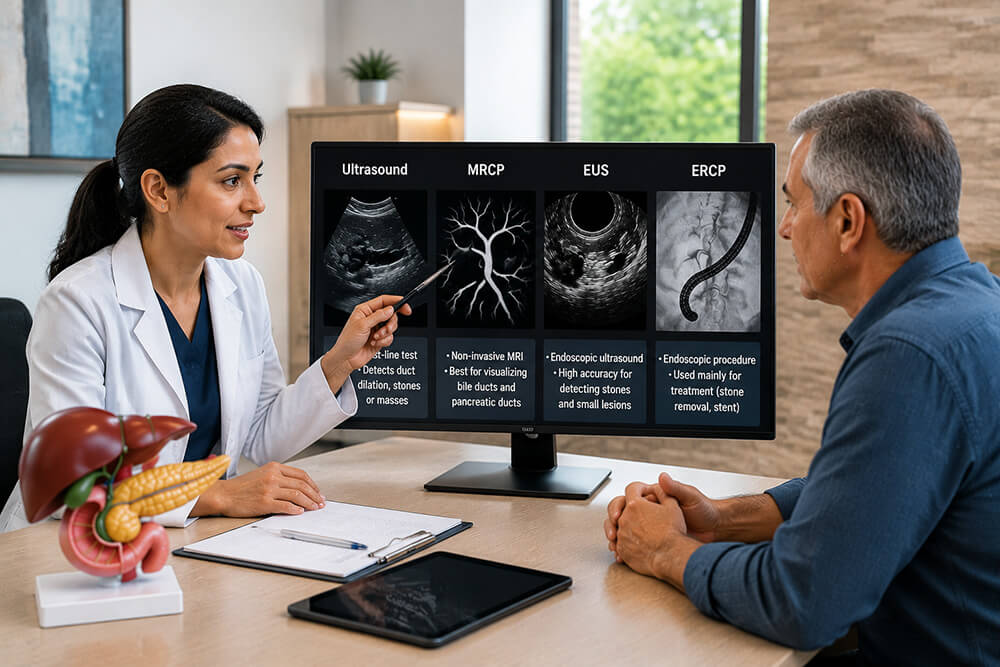
  • MRCP and EUS are commonly used for diagnosis; ERCP is usually reserved when treatment may be needed.

Why the duct may widen after surgery

The gallbladder normally stores bile. After cholecystectomy, bile flows more directly from the liver through the bile ducts into the small intestine. The common bile duct may adapt by becoming somewhat wider, even when there is no blockage.

What may be considered expected

Research has reported that asymptomatic common bile duct dilation up to about 10 mm after gallbladder removal can be within a normal range. This does not mean every 10 mm duct is automatically normal. It means the patient's full picture must guide interpretation.

When post-surgery dilation is not normal

Dilation after gallbladder removal needs more attention if there is right upper abdominal pain, fever, jaundice, nausea, vomiting, abnormal liver tests, pancreatitis, or a duct that continues to enlarge. Stones can still occur in the bile duct even without a gallbladder.

Could stones still happen?

Yes. Some stones may have been present before surgery and later move or become symptomatic. Less commonly, stones can form in the bile duct. A patient without a gallbladder can still develop bile duct obstruction.

Testing options

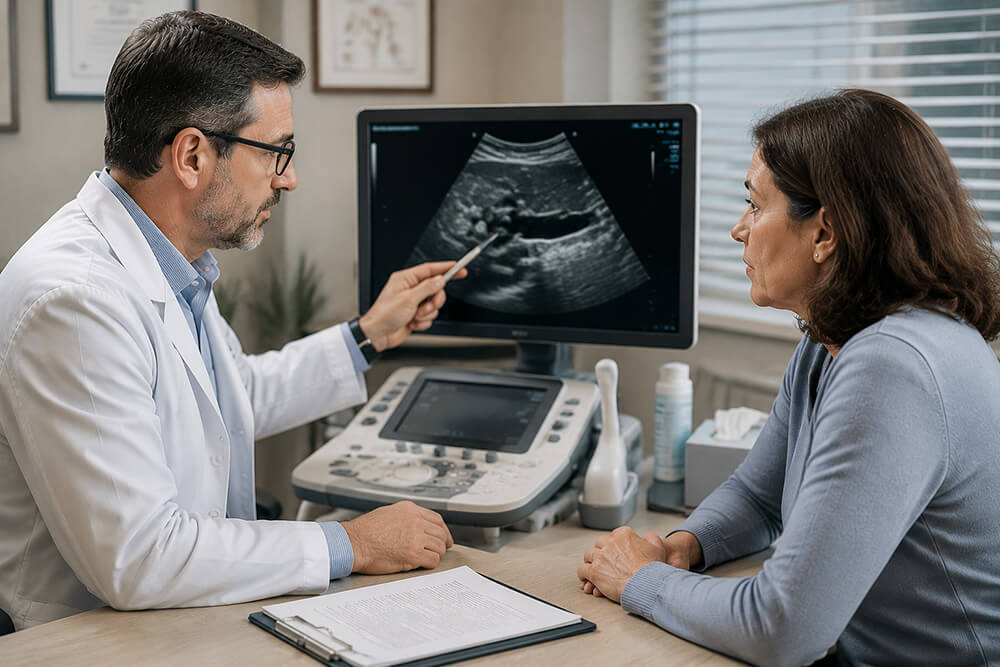
Depending on the situation, evaluation may include liver tests, ultrasound, CT, MRCP, EUS, or ERCP. ERCP may be used when a stone needs removal or a stricture needs treatment.

Patient takeaway

Mild CBD dilation after gallbladder removal is often not alarming by itself. The key is whether you feel well, your labs are normal, and the imaging does not show signs of blockage.
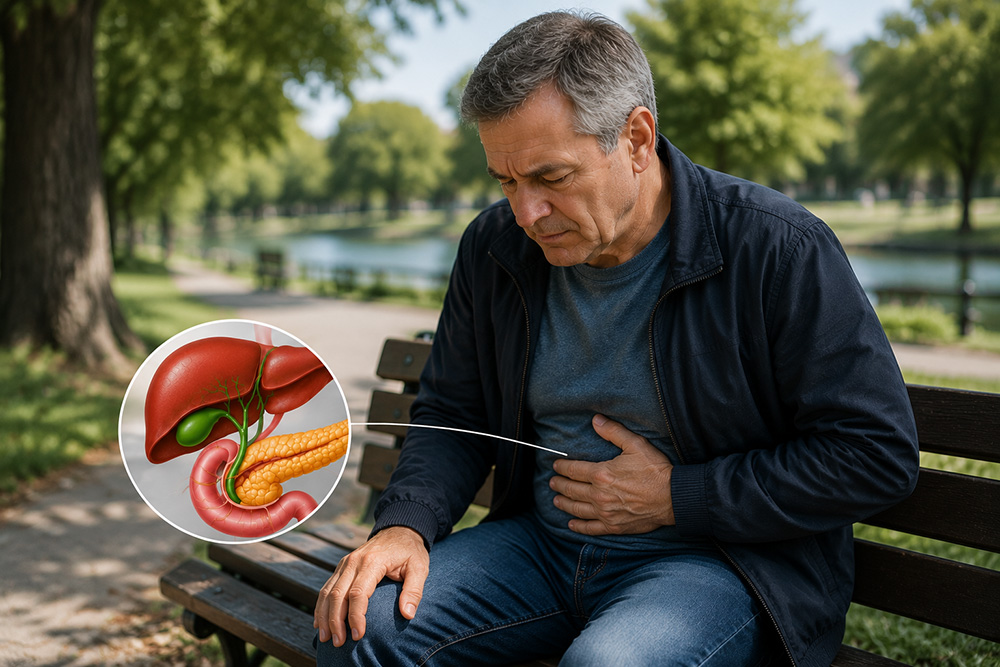
If you had gallbladder removal and now have CBD dilation with pain or abnormal labs, schedule a GI evaluation.

Digestive Guidance Need Digestive Health Guidance?

Schedule a visit with GastroDoxs for personalized digestive health support.

About the Author Dr. Bharat Pothuri

Dr. Bharat Pothuri is a Board-Certified Gastroenterologist and Hepatologist. With extensive experience in digestive health, he specializes in advanced endoscopic procedures, chronic GI disorder management, and preventive care.

Frequently Asked Questions

What does CBD mean in a radiology report?

CBD usually means common bile duct, the main tube that carries bile from the liver and gallbladder area into the small intestine. It does not mean cannabis in this medical context.

Is common bile duct dilation always an emergency?

No. Some cases are incidental and low risk, especially when there are no symptoms and liver blood tests are normal. Urgent evaluation is more important when there is jaundice, fever, severe pain, abnormal liver tests, pancreatitis, or concerning imaging findings.

Can a dilated bile duct go back to normal?

It depends on the cause. If a temporary blockage passes, the duct may improve. If dilation is related to age or prior gallbladder removal, it may remain mildly enlarged without causing problems.

Who treats a dilated common bile duct?

A gastroenterologist usually helps evaluate bile duct dilation, especially when more testing such as MRCP, EUS, or ERCP may be needed.

Can gallbladder removal cause permanent CBD dilation?

It can lead to persistent mild widening in some patients. This may be harmless when asymptomatic and stable.

Can you have bile duct stones after gallbladder removal?

Yes. Bile duct stones can still occur after gallbladder removal.

Is 10 mm CBD normal after gallbladder removal?

It may be within expected range for some asymptomatic patients, but symptoms or abnormal labs change the interpretation.

What symptoms after gallbladder removal should I report?

Report jaundice, fever, chills, severe pain, dark urine, pale stools, vomiting, or unexplained weight loss.