See a gastroenterologist for a dilated common bile duct if you have pain, jaundice, fever, abnormal liver tests, pancreatitis, weight loss, prior bile duct problems, unclear imaging, or a duct that is larger or increasing over time.
Key Takeaways
- A dilated common bile duct is an imaging finding, not a final diagnosis.
- Symptoms, liver blood tests, age, gallbladder history, and imaging details decide how concerning the finding is.
- Gallstones, strictures, inflammation, pancreatitis, and less commonly tumors can block bile flow and cause duct widening.
- MRCP and EUS are commonly used for diagnosis; ERCP is usually reserved when treatment may be needed.
Why a gastroenterologist helps
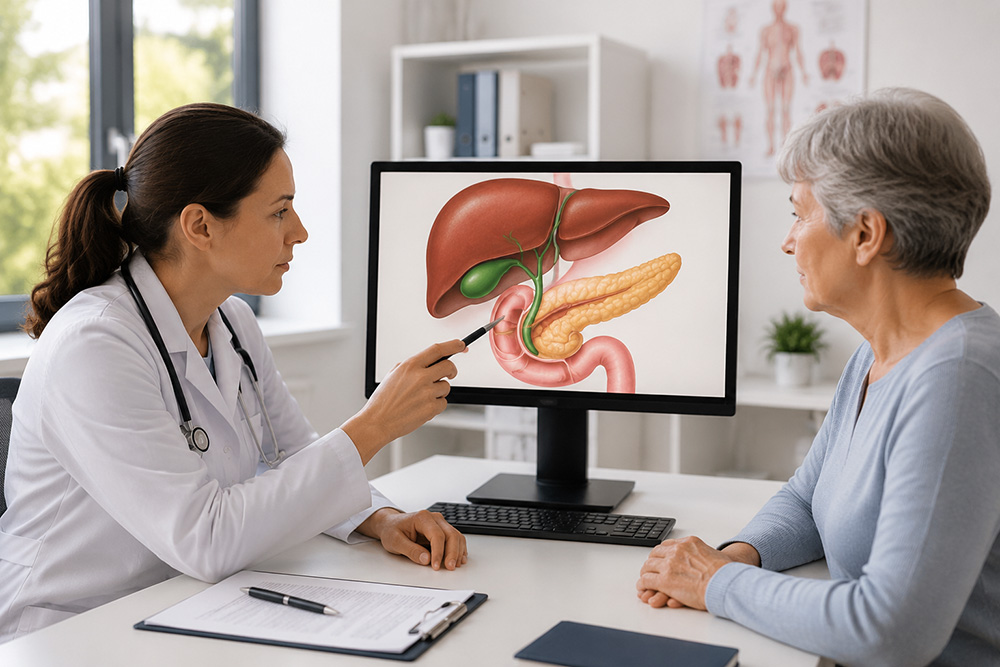
CBD dilation sits at the intersection of liver, gallbladder, bile duct, pancreas, and digestive health. A gastroenterologist can interpret the finding, review liver tests, compare prior scans, and decide whether observation or additional testing is needed.
Clear reasons to schedule
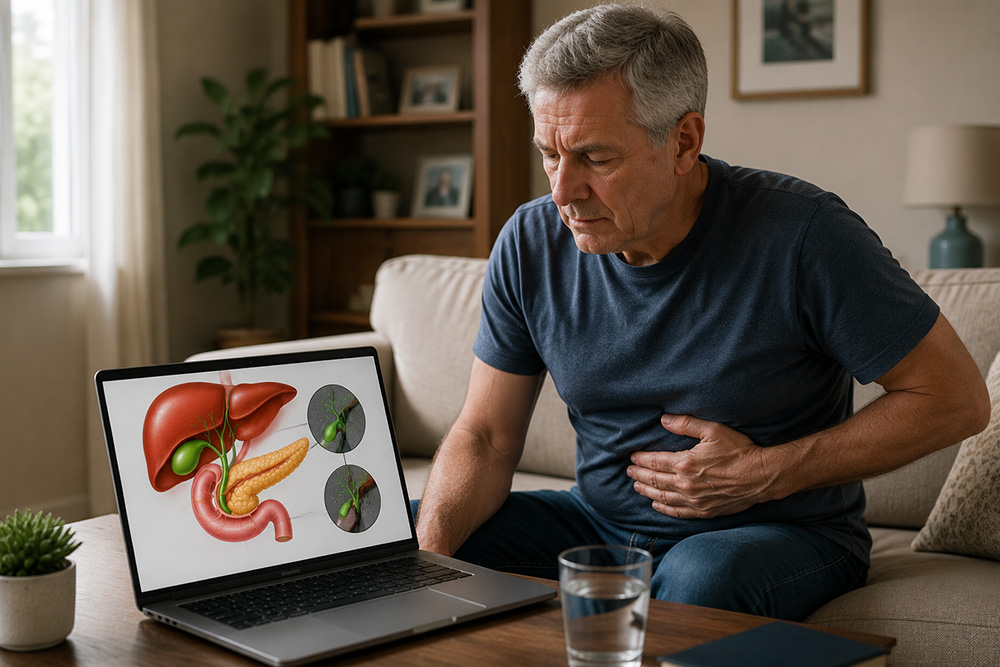
Schedule evaluation if your report shows CBD dilation with right upper abdominal pain, nausea, vomiting, jaundice, dark urine, pale stools, itching, fever, chills, abnormal liver tests, pancreatitis, or unexplained weight loss.
Reasons to ask for timely review
Timely review is also important if the report mentions possible stone, stricture, mass, ampullary abnormality, pancreatic duct dilation, intrahepatic duct dilation, or progressive enlargement compared with prior imaging.
What to bring
Bring your imaging report, images if available, blood test results, medication list, history of gallbladder surgery, prior pancreatitis history, and notes on symptoms. Include when symptoms started and whether they relate to meals.
What may happen at the visit
The clinician may order or review liver blood tests, repeat imaging, MRCP, EUS, or ERCP depending on risk. They may also determine that no invasive test is needed right away if the finding is low risk.
How this supports better care
The goal is to match the level of testing to the level of risk. This helps avoid unnecessary procedures while making sure obstruction, infection, stones, or serious causes are not missed.