Introduction: Understanding Colon Polyps and Their Cancer Risk
Regarding colorectal health, the biggest question that would be raised is whether colon polyps are necessarily cancerous. In the case of patients in Cypress, TX, it is a very important issue, given that over time polyps could occur in the colon without any observable symptoms. Polyps are a natural phenomenon but not every polyps develops into cancer. Actually, the majority of the colon polyps are non-cancerous and can be taken away before they get a chance to be cancerous.
This is a detailed guide where we shall discuss what colon polyps are, the various different types, the dangers of this condition and how early detection and screening can be of great importance. By the later end of this post you will learn the connection between colon polyps and cancer and the importance of regular screening to prevent these occurrences.
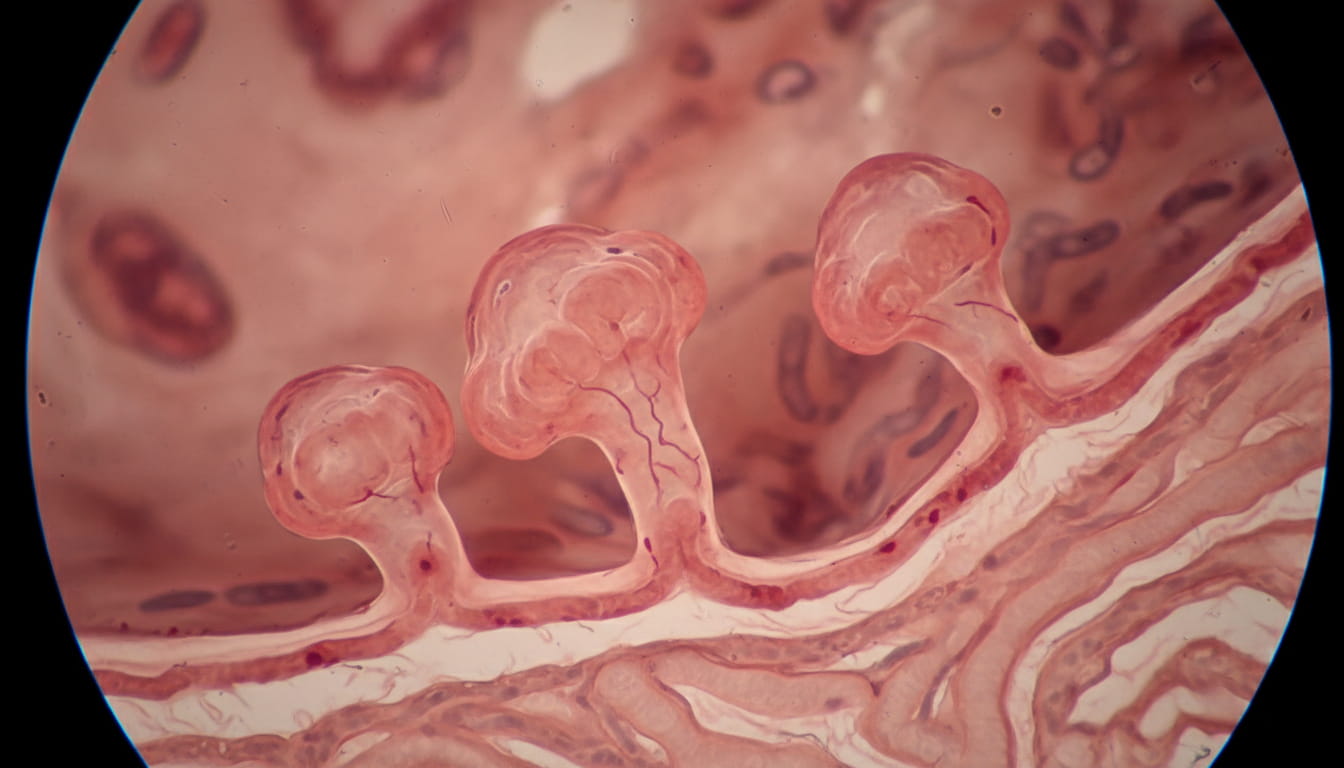
What Are Colon Polyps?
Colon polyps refer to the growths developed on the lining of colon or rectum. Most of the polyps are harmless (non-cancerous) although some may turn into colorectal cancer in the long run.
Polyps are typically categorized into two:
- Non-neoplastic polyps (benign, non-cancerous)
- Neoplastic polyps (potentially cancerous)
Polyps can vary in size, from small and inconspicuous to large and more noticeable. The larger the polyp, the higher the chance it could eventually develop into cancer, but that’s not always the case.
Do Colon Polyps Always Lead to Cancer?
No, colon polyps do not always lead to cancer. In fact, the majority of polyps are non-cancerous. However, some types of polyps, particularly adenomatous polyps (or adenomas), have the potential to become cancerous over time if they are left untreated. That’s why detecting and removing polyps early is important for preventing colorectal cancer.
According to the American Cancer Society, only about 5% of polyps become cancerous, but these cancerous polyps are the ones that can pose a serious health risk. Early detection and removal of polyps can significantly reduce the risk of colorectal cancer.
Types of Colon Polyps
There are several types of colon polyps, each with different potential risks:
1. Adenomatous Polyps (Adenomas)
Adenomas are the most common type of neoplastic polyp and have the highest chance of turning into colon cancer. These polyps are classified into three types:
- Tubular adenomas: The most common type, with a low risk of becoming cancerous.
- Villous adenomas: These are larger, and their cancer risk is higher compared to tubular adenomas.
- Tubulovillous adenomas: These polyps have characteristics of both tubular and villous adenomas.
The larger the adenoma, the higher the risk of it developing into colon cancer.
2. Hyperplastic Polyps
These are non-neoplastic polyps and are generally considered harmless. Hyperplastic polyps typically do not become cancerous, though they may be found in patients with familial colorectal cancer in some cases.
3. Inflammatory Polyps
These are often found in people with inflammatory bowel diseases like Crohn’s disease or ulcerative colitis. While they are generally benign, they can be associated with an increased risk of colon cancer due to the underlying inflammatory condition.
4. Sessile Serrated Polyps (SSPs)
SSPs are a type of polyp that can be harder to detect and remove. While they are not initially cancerous, they can develop into serrated adenomas, which may increase the risk of colon cancer if left untreated.
What Causes Colon Polyps?
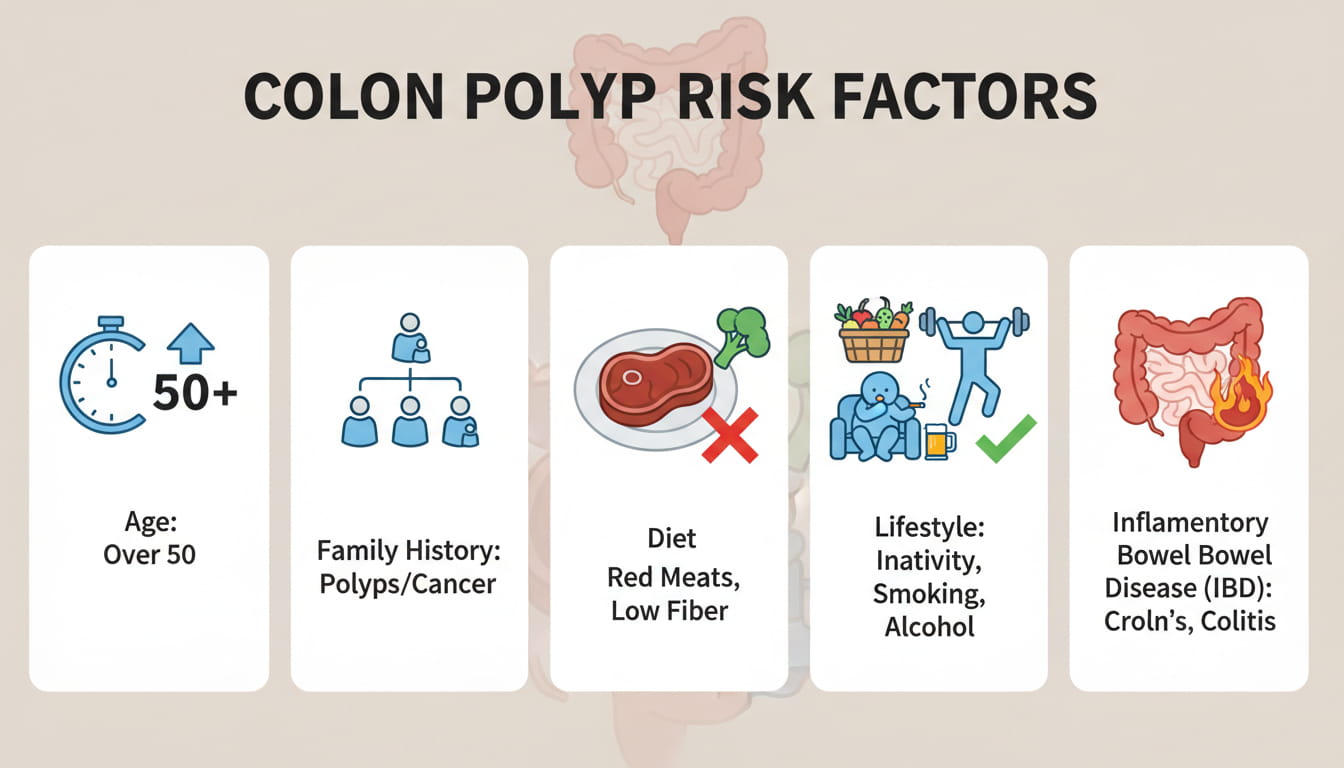
Colon polyps form when cells in the colon lining begin to grow abnormally. The exact cause of this abnormal growth is not always clear, but several factors can increase the likelihood of developing polyps, including:
- Age: Colon polyps are more common as people age, particularly after the age of 50.
- Family History: A family history of colon polyps or colorectal cancer increases the risk.
- Diet: A diet high in red meats and low in fruits and vegetables can increase the risk of polyps.
- Lifestyle: Lack of physical activity, smoking, and heavy alcohol consumption are also associated with a higher risk.
- Inflammatory Bowel Disease (IBD): Conditions like Crohn’s disease and ulcerative colitis increase the risk of developing polyps and colorectal cancer.
When Should You Get Screened for Colon Polyps?
Early screening for colon polyps is essential, as polyps often don’t show symptoms until they become cancerous. Colorectal cancer screening should start at age 45 for most people, according to the American Cancer Society. Those with a family history of colon cancer or other risk factors may need to start screening earlier.
The most common screening methods for colon polyps include:
- Colonoscopy: The gold standard for colon polyp detection. A colonoscopy allows your doctor to examine the entire colon and remove polyps if found.
- Fecal Immunochemical Test (FIT): This stool test checks for hidden blood in the stool, which could indicate the presence of polyps or cancer.
- Flexible Sigmoidoscopy: This test examines the lower part of the colon and may be recommended every 5 years.
- CT Colonography (Virtual Colonoscopy): This imaging test can detect polyps and other abnormalities in the colon.
What Happens If Polyps Are Found?
If polyps are found during a screening, they are usually removed during a colonoscopy. The type and size of the polyp determine how frequently you should be screened in the future. For example:
- Small, non-cancerous polyps: Typically removed and may not require any further action beyond regular screenings.
- Larger polyps or adenomas: May need to be removed and biopsied to determine if they are cancerous or precancerous.
Your doctor will discuss the best course of action based on the results of your screening and the type of polyps found.
Conclusion: Take Action and Get Screened for Colon Polyps
Colon polyps are common, but they don’t always lead to cancer. Early detection through regular screenings is the best way to prevent cancer from developing. If you live in Cypress, TX, take control of your health and schedule a screening today. At GastroDoxs, we are dedicated to helping you stay healthy with early detection, personalized treatment, and expert care.