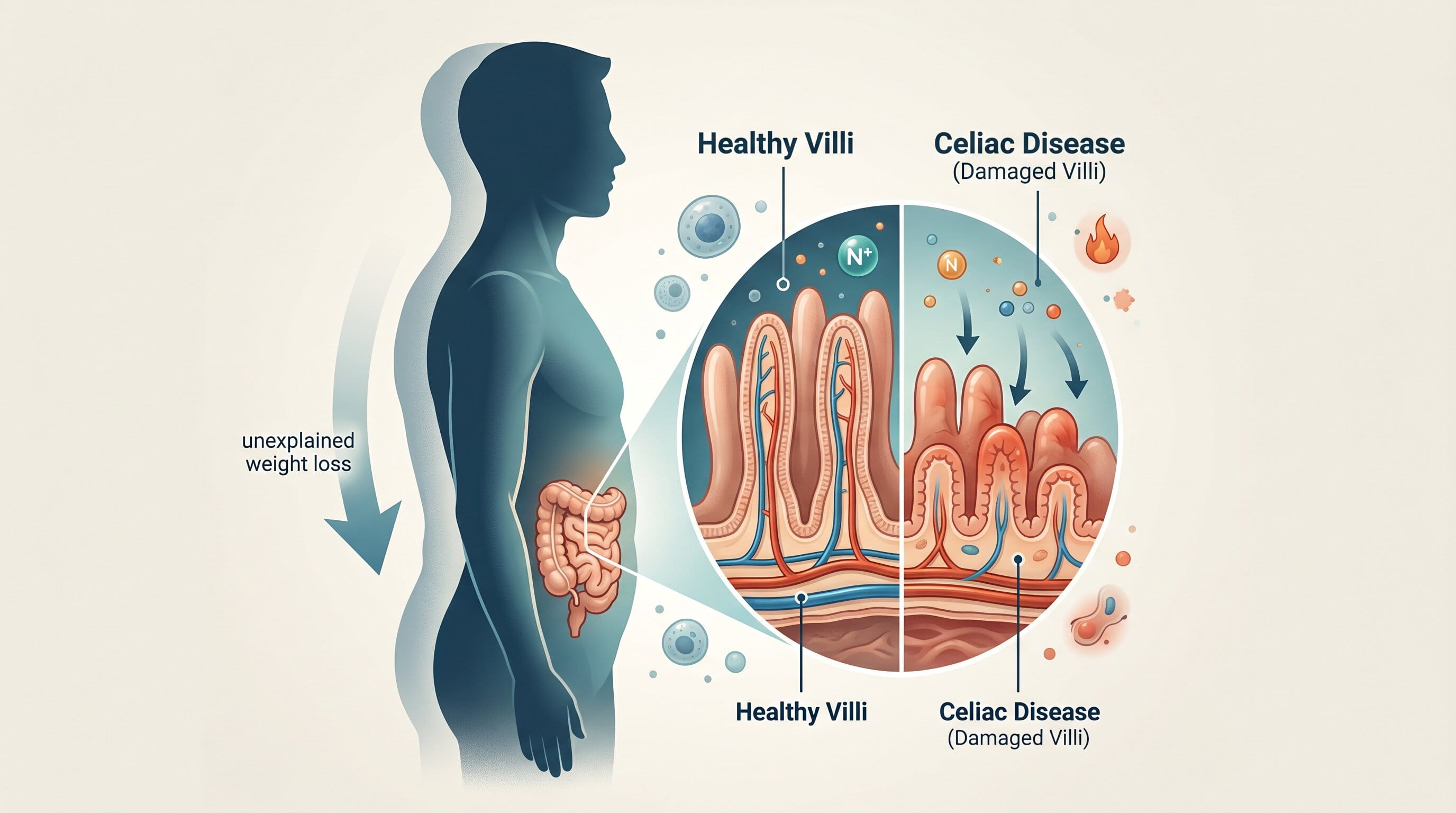
Unexplained weight loss can be one of the warning signs of celiac disease. Some patients lose weight because their small intestine cannot absorb nutrients well. Others lose weight because eating causes bloating, nausea, diarrhea, abdominal discomfort, or fear of symptoms after meals.
Celiac disease is an immune disorder triggered by gluten. Gluten is found in wheat, barley, and rye. In people with celiac disease, gluten exposure can damage the small intestine, where most nutrient absorption occurs. Because of this, weight loss may appear with fatigue, anemia, vitamin deficiencies, stool changes, poor appetite, or general weakness.
Weight loss is not required for celiac disease, but when it happens without a clear reason, it should be evaluated.
How Celiac Disease Affects Nutrient Absorption
The small intestine contains villi, which are tiny structures that absorb nutrients from food. In celiac disease, gluten exposure can damage these villi and reduce the surface area available for absorption. When that happens, the body may not take in enough calories, vitamins, minerals, protein, carbohydrates, or fat.
This problem is called malabsorption. Malabsorption can occur even when a person eats enough food. A patient may be eating normal meals but still develop low iron, low vitamin D, fatigue, weakness, or weight loss because the intestine is not absorbing nutrients efficiently.
Malabsorption can also change stool quality. Greasy, bulky, pale, floating, or foul-smelling stools may suggest that fat and nutrients are not being absorbed normally.
Why Celiac Disease Can Cause Weight Loss
Weight loss may happen for several reasons. First, the body may not absorb calories efficiently because of small-intestinal damage. Second, chronic diarrhea can reduce fluid and nutrient retention. Third, nausea, bloating, and abdominal pain may reduce appetite. Fourth, some patients begin avoiding large groups of foods before diagnosis and unintentionally reduce calorie intake.
The weight loss may be gradual or more noticeable. Some patients lose only a few pounds. Others lose enough weight that clothing becomes loose or family members notice a change.
Unplanned weight loss should always be taken seriously, especially when it occurs with diarrhea, greasy stools, anemia, fatigue, low vitamin levels, or persistent digestive symptoms.
Can You Have Celiac Disease Without Weight Loss?
Yes. Many people with celiac disease do not lose weight. Some maintain a stable weight, and some may even gain weight. Body weight does not rule celiac disease in or out.
A person can have normal weight and still have iron deficiency, vitamin D deficiency, bloating, constipation, diarrhea, or small-intestinal damage. This is especially common in adults, where symptoms may be less classic than the textbook picture of diarrhea and weight loss.
For SEO and patient education, this is an important point: patients should not assume celiac disease is impossible just because they are not underweight.
Common Nutrient Deficiencies in Celiac Disease
Celiac disease can affect absorption of several nutrients. Common deficiencies may include iron, folate, vitamin B12, vitamin D, calcium, zinc, magnesium, and sometimes fat-soluble vitamins.
Iron deficiency can cause fatigue, dizziness, shortness of breath, paleness, fast heartbeat, and poor exercise tolerance. Low vitamin D and calcium can affect bone health. Folate and B12 deficiencies may affect blood cells, energy, nerve function, and concentration.
These deficiencies can make patients feel unwell even when stomach symptoms seem mild. That is why celiac disease is more than a digestive discomfort problem; it can become a whole-body nutrition problem.
Iron Deficiency and Low Ferritin
Iron is absorbed mainly in the upper small intestine, which is often affected by celiac disease. Low ferritin or iron deficiency anemia can be one of the first clues.
Some adults discover possible celiac disease only after routine blood work shows low iron. They may not have severe diarrhea. They may simply feel tired, weak, dizzy, or short of breath with activity. If anemia is unexplained, recurrent, or not improving with supplements, celiac disease should be considered.
This is especially important for men, postmenopausal women, and any patient whose anemia does not have a clear explanation. A GI evaluation may be needed to look for malabsorption or blood loss.
Vitamin D, Calcium, and Bone Health
Poor absorption of vitamin D and calcium can contribute to low bone density over time. This may increase the risk of osteopenia, osteoporosis, or fractures. Bone loss may be silent until testing is done or a fracture occurs.
Patients diagnosed later in adulthood, patients with long-standing symptoms, and patients with repeated low vitamin D may need additional bone health evaluation. Treatment is not only about removing gluten. It is also about restoring nutrients and reducing long-term complications.
A strict gluten-free diet can help the intestine heal, but supplementation and follow-up testing may be needed depending on the patient.
Fat Malabsorption and Greasy Stools
When fat is not absorbed normally, stools may become greasy, bulky, pale, floating, or foul-smelling. This is sometimes called steatorrhea. It can occur when the damaged small intestine cannot absorb nutrients efficiently.
Patients may notice stool that sticks to the toilet bowl, is difficult to flush, smells unusually strong, or appears oily. These symptoms may be embarrassing to discuss, but they are clinically useful.
Greasy stool with weight loss, fatigue, or vitamin deficiencies should be evaluated because it can point to malabsorption. Celiac disease is one possible cause, but pancreatic, liver, gallbladder, and inflammatory bowel conditions may also need consideration.
Symptoms That May Suggest Malabsorption
Malabsorption can cause many symptoms outside the digestive tract. Patients may experience unexplained weight loss, chronic diarrhea, greasy stools, fatigue, weakness, anemia, easy bruising, numbness, tingling, muscle cramps, mouth ulcers, low vitamin levels, bone pain, headaches, brain fog, or poor overall energy.
These symptoms can overlap with many conditions. The pattern becomes more suspicious for celiac disease when symptoms occur with gluten exposure, family history, autoimmune disease, iron deficiency, or long-term bowel changes.
Celiac Disease vs Other Causes of Weight Loss
Unexplained weight loss can come from many causes. These include thyroid disease, diabetes, inflammatory bowel disease, chronic infection, cancer, depression, medication effects, pancreatic disease, liver disease, swallowing problems, and other digestive disorders.
Celiac disease is one possible cause, especially when weight loss occurs with chronic diarrhea, bloating, greasy stools, anemia, nutrient deficiencies, or symptoms after gluten-containing foods.
Because the differential diagnosis is broad, patients should avoid guessing. A structured evaluation helps identify whether the issue is malabsorption, reduced intake, inflammation, metabolic disease, or another medical problem.
Why Testing Matters Before Going Gluten-Free
If celiac disease is possible, testing should happen before starting a gluten-free diet. Removing gluten too early can lower antibody levels and allow the intestinal lining to begin healing. This may make blood tests and biopsy less accurate.
A confirmed diagnosis matters because celiac disease requires strict lifelong gluten avoidance and follow-up. Without testing, a patient may not know whether they have celiac disease, gluten sensitivity, IBS, wheat intolerance, or another condition.
If a patient already went gluten-free, they should tell their doctor. Testing may still be possible, but the plan may need adjustment.
How Celiac Disease Is Diagnosed
Diagnosis may include symptom review, diet history, family history, celiac antibody blood tests, total IgA, nutritional labs, and upper endoscopy with small-intestinal biopsy when needed.
Blood tests are often the first step. If results suggest celiac disease, a gastroenterologist may recommend upper endoscopy. During endoscopy, small tissue samples can be taken from the small intestine to look for celiac-type damage.
Nutritional labs may include iron studies, ferritin, vitamin D, B12, folate, calcium, and other markers depending on symptoms.
Treatment for Weight Loss and Malabsorption
If celiac disease is confirmed, the main treatment is a strict gluten-free diet. The goal is to stop immune injury and allow the small intestine to heal.
Treatment may also include iron replacement, vitamin D, calcium, folate, B12, zinc, or other supplementation based on lab results. Some patients need dietitian support to rebuild calories and nutrients safely without gluten.
The diet should not be a random restriction plan. It should be nutritionally complete, realistic, and sustainable. Gluten-free packaged foods are not automatically healthier, so balanced meal planning matters.
How Long Does Nutrient Recovery Take?
Recovery time varies. Some patients feel better within weeks. Others need months for energy, stool patterns, weight, and lab values to improve. In adults diagnosed later, intestinal healing may take longer.
Recovery depends on strict gluten avoidance, severity of intestinal damage, hidden gluten exposure, baseline deficiencies, other digestive conditions, and overall diet quality.
Follow-up testing helps confirm that antibodies are improving and deficiencies are being corrected. If weight loss continues despite a gluten-free diet, the patient should be reassessed for hidden gluten exposure or another diagnosis.

When to See GastroDoxs
Patients in Houston, Cypress, Katy, and Jersey Village should consider GI evaluation if they have unexplained weight loss, chronic diarrhea, greasy stools, fatigue, anemia, low vitamin D, low B12, abdominal bloating, or symptoms after gluten.
GastroDoxs can evaluate malabsorption patterns and determine whether celiac testing, nutritional labs, stool testing, endoscopy, or another GI workup is appropriate. This is especially important when weight loss is not intentional or when deficiencies keep returning.
Final Answer
Celiac disease can cause weight loss and poor nutrient absorption because gluten-triggered inflammation damages the small intestine. This can reduce absorption of calories, iron, vitamin D, calcium, folate, B12, and other nutrients.
Unexplained weight loss, anemia, chronic diarrhea, greasy stools, fatigue, or vitamin deficiencies should be evaluated before starting a gluten-free diet. The right diagnosis helps prevent long-term nutrition problems and supports safe recovery. This content is educational and should not replace individualized medical care. Patients with severe pain, dehydration, blood in stool, black stool, persistent vomiting, fainting, or rapid weight loss should seek prompt medical attention.