Celiac disease does not always look like a digestive problem. Some people first notice a skin rash rather than diarrhea, bloating, or abdominal pain. This rash is called dermatitis herpetiformis. It is strongly linked to celiac disease and gluten-related immune activity.
The rash can be intensely itchy, blistering, and recurring. Because it may appear even when digestive symptoms are mild or absent, it can be one of the most overlooked signs of celiac disease.
Patients may spend months treating the rash as eczema, allergies, bug bites, or dry skin before anyone connects it to gluten and celiac disease.
What Is Dermatitis Herpetiformis?
Dermatitis herpetiformis is a chronic, itchy, blistering skin condition associated with celiac disease. It happens when the immune system reacts to gluten and immune proteins deposit in the skin.
The word herpetiformis describes the grouped blister-like appearance. It does not mean the rash is caused by herpes. Dermatitis herpetiformis is not contagious and is not a sexually transmitted infection.
For many patients, understanding this difference reduces anxiety. The rash is a gluten-related immune skin manifestation, not a herpes infection.
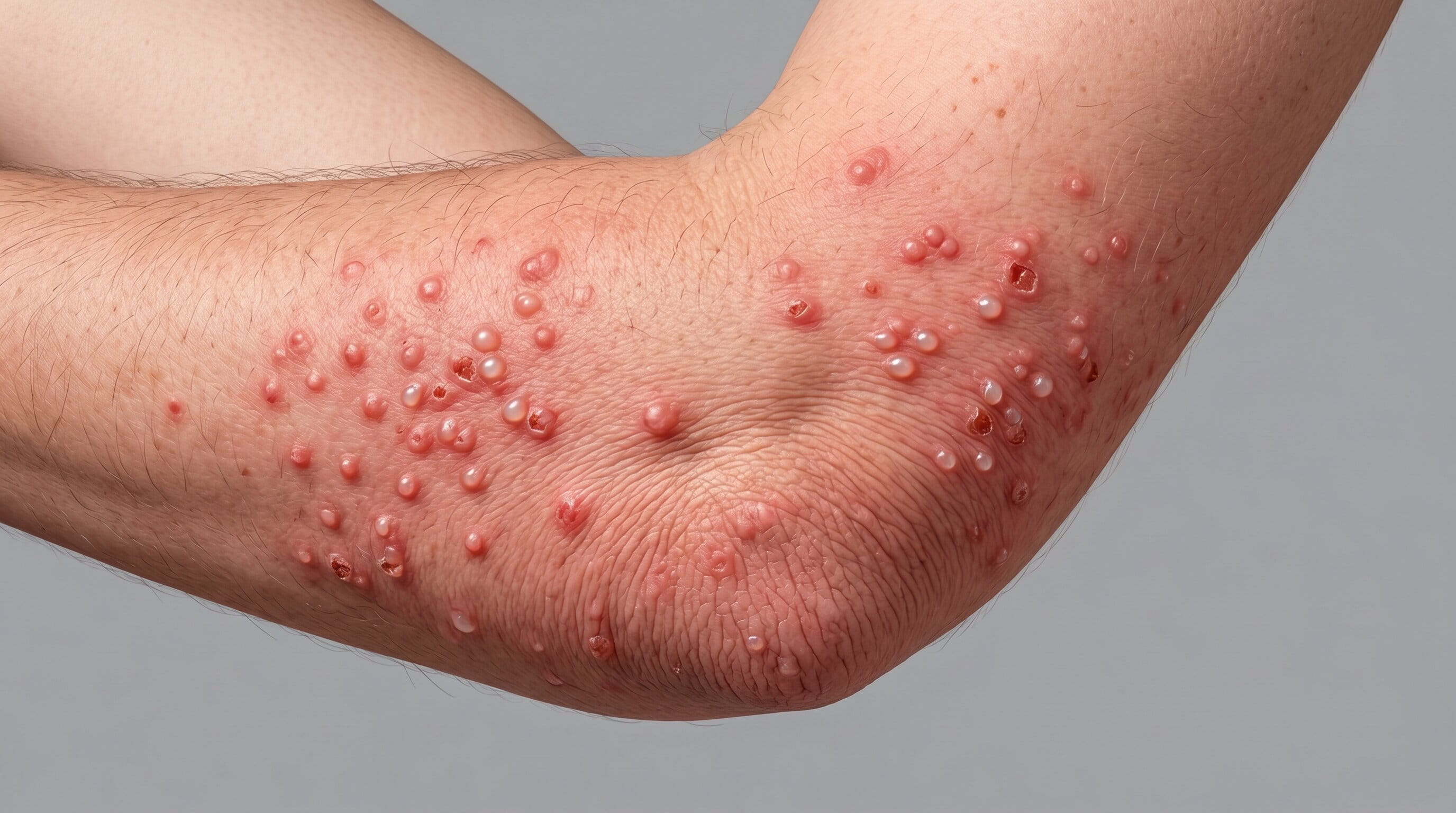
What Does a Celiac Disease Rash Look Like?
The rash may appear as small bumps, blisters, red patches, crusted spots, scratched areas, or scabs. Because it is extremely itchy, many people scratch before blisters are clearly visible. This can make the rash look like irritation, open sores, or healing scratches.
The rash often appears in clusters and may occur symmetrically on both sides of the body. It may flare, calm down, and return again. Some people notice that scratching creates more irritation and makes the rash harder to identify.
A persistent, symmetrical, itchy blistering rash should be evaluated, especially when it occurs with gluten-related symptoms or family history of celiac disease.
Can You Have Dermatitis Herpetiformis Without Diarrhea?
Yes. Some people with dermatitis herpetiformis do not have classic digestive symptoms. They may not have chronic diarrhea, major bloating, or abdominal pain. They may only have an itchy recurring rash, fatigue, mild bloating, or low iron.
This can delay diagnosis because the problem looks dermatologic rather than gastrointestinal. A patient may try creams, allergy medicines, or antibiotics before celiac disease is considered.
If dermatitis herpetiformis is suspected, celiac evaluation is important even when bowel symptoms are minimal.
Symptoms That May Occur With the Rash
Some patients with dermatitis herpetiformis also have bloating, gas, diarrhea, constipation, abdominal discomfort, fatigue, iron deficiency anemia, low vitamin D, headaches, brain fog, mouth ulcers, or unexplained nutrient deficiencies.
These symptoms strengthen the need for celiac testing. However, the rash itself may be enough to raise suspicion when it has a typical itchy, blistering, symmetrical pattern.
Patients should tell their doctor about both skin symptoms and digestive symptoms, even if they seem unrelated.
Dermatitis Herpetiformis vs Eczema
Dermatitis herpetiformis may be confused with eczema because both can itch and recur. However, dermatitis herpetiformis often has grouped bumps or blisters, symmetrical distribution, and a strong gluten connection.
Eczema is common and can be triggered by irritants, allergies, dry skin, or inflammation, but it is not the same as celiac-related dermatitis herpetiformis. Topical creams may reduce irritation temporarily but may not address the gluten-triggered immune process if dermatitis herpetiformis is the real cause.
A dermatologist can help evaluate the skin pattern, while a gastroenterologist can evaluate for celiac disease.
Dermatitis Herpetiformis vs Hives or Allergies
Hives often appear suddenly as raised welts and may move around within hours. Allergic rashes may occur after foods, medications, insect stings, or environmental exposures. Dermatitis herpetiformis tends to be more persistent, intensely itchy, blistering, and recurring in typical locations.
It may leave scratch marks, crusts, or scabs because the itching is strong. It may also appear in a symmetrical pattern on elbows, knees, buttocks, or scalp.
Because rashes can look similar, diagnosis should not be based only on online images. A medical exam and biopsy may be needed.
How Dermatitis Herpetiformis Is Diagnosed
Diagnosis often involves a skin biopsy, usually from normal-looking skin next to a lesion rather than the scratched center. The biopsy can look for specific immune deposits that support dermatitis herpetiformis.
Celiac blood tests may also be ordered. These may include tissue transglutaminase IgA and total IgA, with additional tests depending on the case. A gastroenterologist may evaluate whether upper endoscopy or small-intestinal biopsy is needed.
A combined approach can help confirm the rash and assess whether there is intestinal involvement, nutrient deficiency, or another digestive issue.
Why Celiac Testing Still Matters
A rash diagnosis does not mean the digestive tract should be ignored. Dermatitis herpetiformis is closely linked with celiac disease, and patients may have intestinal damage or nutrient deficiencies even without major stomach symptoms.
Testing can help guide diet, follow-up, and long-term monitoring. It can also help determine whether family members may need screening, especially if symptoms or risk factors are present.
The goal is not only to stop itching. The goal is to control the underlying gluten-triggered immune response.
Do Not Start Gluten-Free Before Testing
If celiac disease is suspected, testing should usually happen before gluten is removed. Starting a gluten-free diet too early can reduce antibody levels and may make diagnostic testing less accurate.
Patients often want to remove gluten immediately when they learn there may be a connection. That is understandable, but it can make confirmation harder. If symptoms are severe or the patient already stopped gluten, the doctor can advise the safest next step.
A clear diagnosis helps patients understand whether lifelong strict gluten avoidance is necessary.
Treatment for Dermatitis Herpetiformis
Treatment usually includes a strict gluten-free diet. Some patients may also receive medication such as dapsone for rash control under medical supervision. Dapsone can reduce itching and blisters quickly for some patients, but it requires monitoring because side effects are possible.
Medication can help control the skin, but the gluten-free diet addresses the underlying trigger. Without gluten avoidance, rash flares and intestinal immune activity may continue.
Patients should not self-treat with medication or supplements. Treatment should be guided by a clinician familiar with the condition.
How Long Does the Rash Take to Improve?
The rash may improve with treatment, but skin healing can take time. Some patients need medication early while the gluten-free diet takes effect. Others may notice flares if they are accidentally exposed to gluten.
Long-term control usually depends on strict gluten avoidance, careful label reading, reducing cross-contact, and follow-up with appropriate specialists.
Because the rash can be slow to settle, patients should not assume the diagnosis is wrong if improvement is not immediate.
Hidden Gluten and Rash Flares
For confirmed celiac disease or dermatitis herpetiformis, hidden gluten can trigger symptoms. Possible sources include sauces, gravies, soy sauce, malt, beer, breaded foods, shared fryers, processed meats, seasoning blends, soups, supplements, and cross-contact in kitchens.
A dietitian can help patients learn safe food choices and reduce accidental exposure. This is especially useful because tiny exposures may matter even when a patient is not eating obvious bread or pasta.

When to See GastroDoxs
Patients in Houston, Cypress, Katy, and Jersey Village should consider a GI evaluation if they have an itchy blistering rash plus bloating, diarrhea, constipation, fatigue, anemia, weight loss, nutrient deficiencies, or symptoms after gluten.
GastroDoxs can help evaluate whether celiac disease testing or endoscopy is appropriate. A dermatologist may diagnose the rash, while a gastroenterologist can assess digestive involvement and long-term celiac management.
Final Answer
A celiac disease rash is often dermatitis herpetiformis, an intensely itchy, blistering rash linked to gluten-related immune activity. It commonly appears on the elbows, knees, scalp, back, buttocks, or shoulders.
Because some patients have few digestive symptoms, rash evaluation and celiac testing are important before starting a gluten-free diet. Correct diagnosis helps manage the rash, protect the small intestine, and reduce long-term complications. This content is educational and should not replace individualized medical care. Patients with severe pain, dehydration, blood in stool, black stool, persistent vomiting, fainting, or rapid weight loss should seek prompt medical attention.