



★★★★★
"GastroDoxs helped me understand why my pelvic pain kept coming back and what testing made sense."

 Medically Reviewed by
Dr. Bharat Pothuri, MD, FACG
| Updated July 10, 2026
Medically Reviewed by
Dr. Bharat Pothuri, MD, FACG
| Updated July 10, 2026
Pelvic pain treatment works best when the source is separated from gynecology-only assumptions and bowel, pelvic floor, inflammatory, post-surgical, and functional causes are reviewed. GastroDoxs GutRescue Mission™ helps patients move from recurring pelvic pain to GI-focused evaluation, treatment planning, referral coordination, and follow-up clarity.
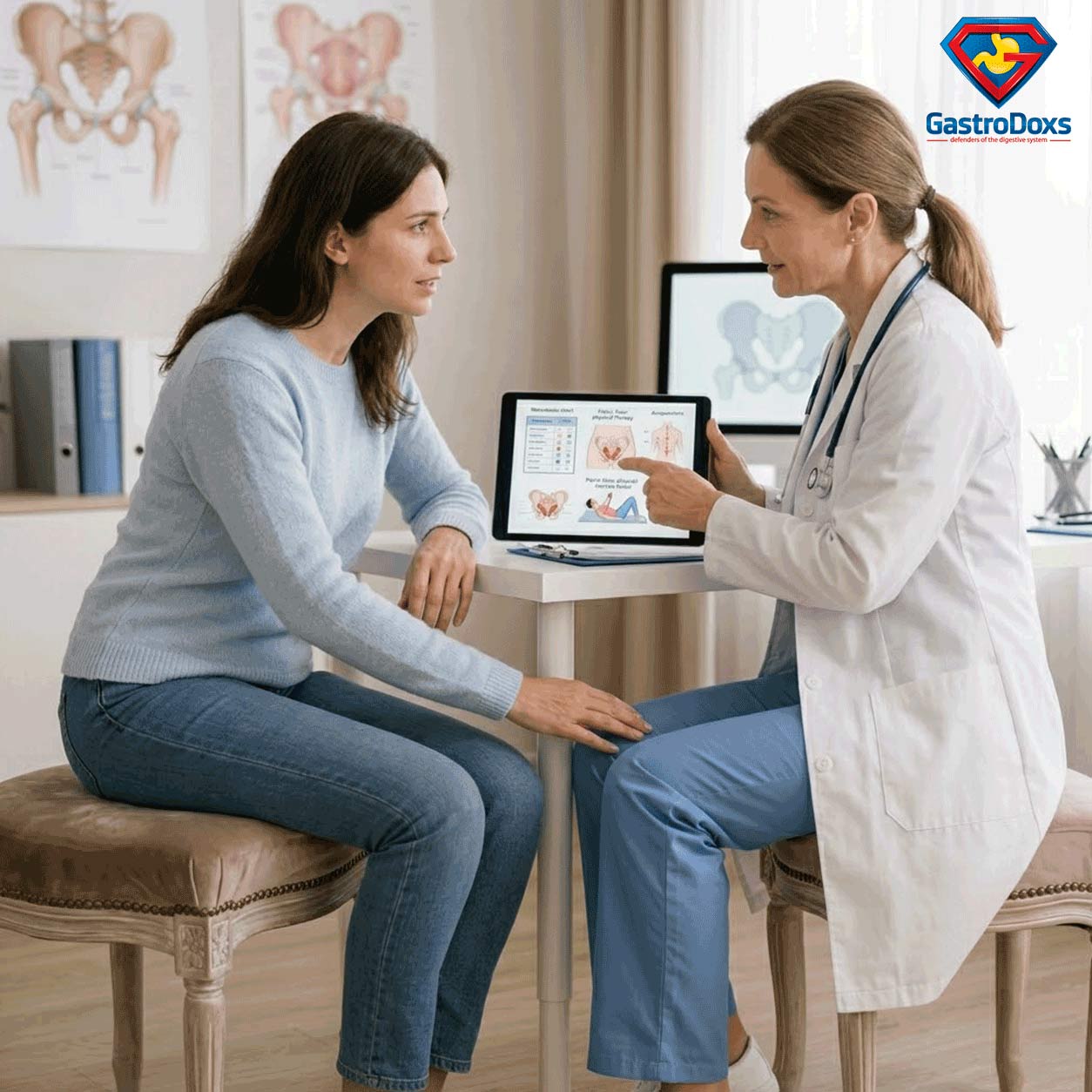
Focused GI evaluation, practical treatment planning, and clear follow-up
We evaluate pelvic pain that changes with bowel movements, constipation, diarrhea, urgency, gas, or incomplete emptying.
Pelvic floor dysfunction can cause pain, pressure, constipation, straining, and incomplete evacuation.
Adhesions, scar tissue, bowel habit changes, and nerve irritation may contribute after abdominal or pelvic surgery.
When symptoms suggest gynecology, urology, pelvic floor therapy, or pain management involvement, GastroDoxs helps clarify referral direction.
This BOFU page is built for patients ready to schedule care, compare options, and understand what happens next.
Your guardians. GastroDoxs GutGuardians™ is an elite team of board-certified gastroenterologists - a physician-led defense force of specialists, systems, and solution pathways working together to protect, detect, solve, and defend your digestive health through expert GI evaluation, advanced diagnostic screening, and endoscopic evaluation - commanded from your first concern to your last follow-up, and every critical stage in between.
Your rescue plan. When your diagnosis is confirmed, GastroDoxs GutRescue Mission™ deploys at full force - a gastroenterologist-led intervention plan delivering advanced colonoscopy, upper endoscopy, capsule endoscopy, and precision biologic and medication management across the full range of digestive conditions and complex GI emergencies - fighting for you with everything we have.
A clear path from appointment request to treatment planning
Schedule when pelvic pain overlaps with bowel changes, bloating, rectal symptoms, or unclear abdominal testing.
Bring pelvic imaging, surgery notes, gynecology or urology records, colonoscopy reports, labs, and medication lists.
Your provider reviews timing with meals, bowel movements, cycle timing, urination, activity, and prior surgery.
The plan may include bowel treatment, stool testing, colonoscopy discussion, pelvic floor referral, imaging review, or specialist coordination.
GastroDoxs provides GI-focused evaluation for pelvic pain using symptom review, appropriate testing, records review, treatment planning, and clear follow-up.







GastroDoxs helps patients evaluate and treat pelvic pain with board-certified GI care, appointment support, records review, and next-step planning.
Seek GI evaluation when pelvic pain occurs with constipation, diarrhea, bloating, rectal pressure, mucus, bleeding, incomplete emptying, abdominal pain, or unexplained bowel changes.
Yes. Rectal pressure can overlap with constipation, hemorrhoids, fissures, inflammation, pelvic floor dysfunction, or rectal muscle coordination problems.
Many patients improve when IBS subtype, bowel pattern, diet triggers, stress signals, and medication options are addressed in a structured plan.
Dietary guidance may help when pelvic pain overlaps with bloating, IBS, constipation, diarrhea, or food intolerance. A dietitian may be recommended when needed.
Follow-up depends on severity, testing, treatment response, and whether another specialist is involved. Chronic symptoms often need planned reassessment.
A GI specialist can review food patterns and decide whether diet trials, celiac testing, breath testing, or stool testing is appropriate.
Doctors review bowel habits, pain timing, rectal symptoms, imaging, labs, prior surgery, food triggers, and red flags before selecting tests or referrals.
Severe, sudden, or rapidly worsening pelvic pain should go to urgent or emergency care first. GI clinics are best for stable, non-emergency evaluation.
Yes. Stool burden, straining, and pelvic floor dysfunction can cause pelvic pressure, pain, bloating, and incomplete emptying.
Yes. Adhesions, scar tissue, motility changes, nerve irritation, or bowel pattern changes may contribute and should be reviewed with prior surgical records.
No. Pelvic pain may be digestive, urinary, gynecologic, pelvic floor, nerve-related, or mixed.
Bring imaging, surgery notes, colonoscopy reports, medication list, bowel diary, gynecology or urology records, and symptom timing notes.
Colonoscopy may help when pelvic pain occurs with bleeding, anemia, chronic diarrhea, bowel habit changes, family history, or persistent unexplained symptoms.
Treatment may include constipation care, diarrhea control, IBS therapy, diet changes, pelvic floor therapy, medication review, or testing-guided treatment.
Urgent signs include sudden severe pain, fever, vomiting, fainting, pregnancy concern, heavy bleeding, black stool, rectal bleeding with weakness, or dehydration.
Book a GastroDoxs pelvic pain evaluation when symptoms overlap with bowel habits, bloating, rectal pressure, post-surgical changes, or unclear testing.