
What Happens If You Delay a Paracentesis? 3 Risks to Know
The useful starting point is “missed infection while treatment waits.” When cirrhosis and ascites are accompanied by hospitalization, fever, pain, confusion, or kidney decline, a diagnostic tap can detect spontaneous bacterial peritonitis. Delay can postpone antibiotics and albumin decisions. The rest of this guide explains which details change testing, care, and urgency.
Key Takeaways
- Put postponement in clinical context
- Paracentesis is a sterile needle or catheter procedure to sample or drain fluid from the abdominal cavity.
- When cirrhosis and ascites are accompanied by hospitalization, fever, pain, confusion, or kidney decline, a diagnostic tap can detect spontaneous bacterial peritonitis.
- Without fluid studies, clinicians may lack information about portal hypertension, infection, or selected malignant causes.
- Ascites with fever, new abdominal pain, confusion, low blood pressure, or a marked decline can signal infection or another serious problem and needs urgent assessment.

Put postponement in clinical context
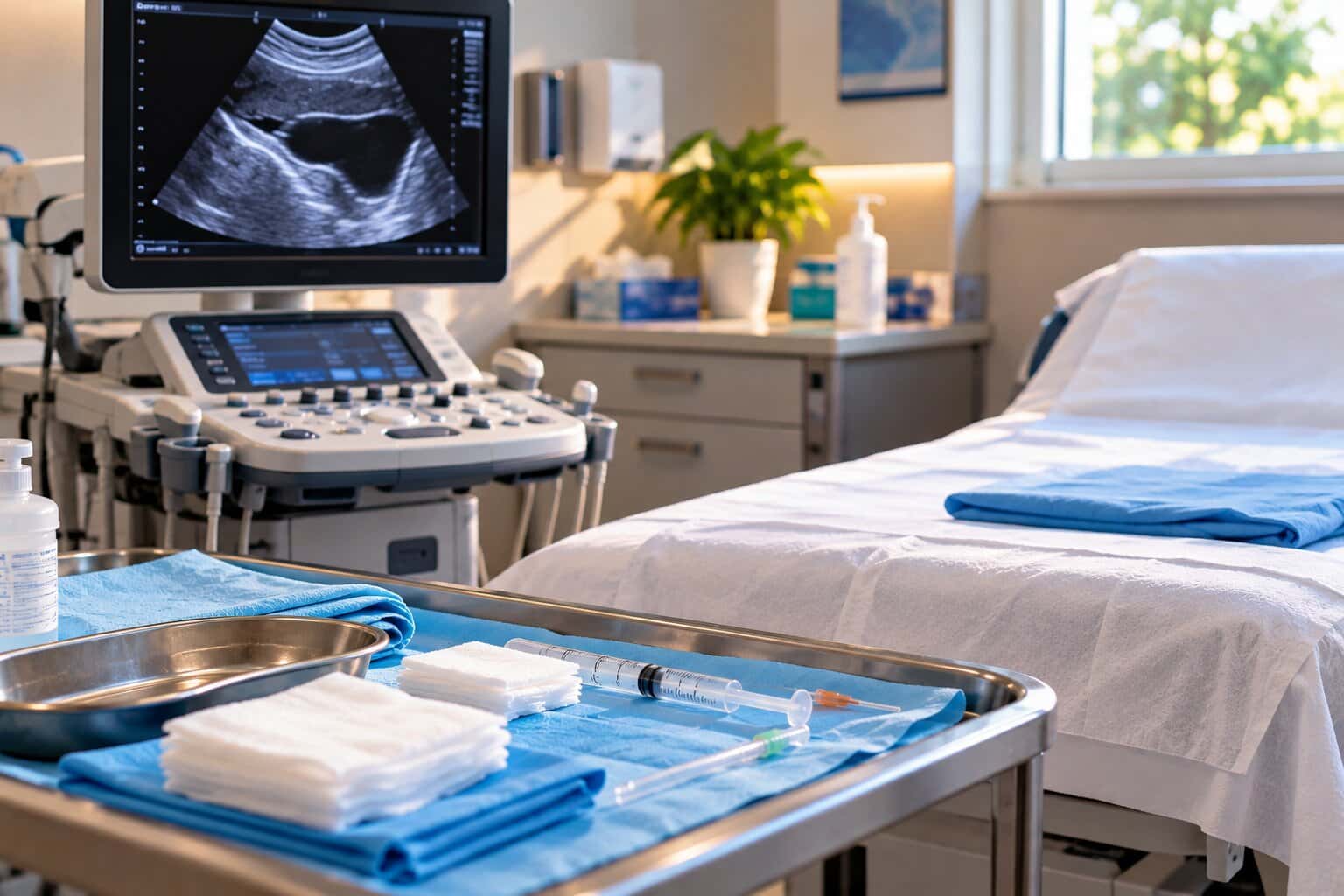
The useful starting point is “missed infection while treatment waits.” When cirrhosis and ascites are accompanied by hospitalization, fever, pain, confusion, or kidney decline, a diagnostic tap can detect spontaneous bacterial peritonitis. Delay can postpone antibiotics and albumin decisions. The rest of this guide explains which details change testing, care, and urgency. Paracentesis is a sterile needle or catheter procedure to sample or drain fluid from the abdominal cavity. A diagnostic tap examines the cause or infection; a therapeutic tap relieves symptomatic fluid pressure. Read the topic overview to understand the broader condition or symptom.
A distended abdomen does not by itself prove ascites, and a sample used to diagnose infection is not the same clinical goal as removing liters for relief. Ultrasound and the clinical situation guide the decision and placement. The final point in this article adds a practical limit: Without fluid studies, clinicians may lack information about portal hypertension, infection, or selected malignant causes. The urgency depends on the person and any warning signs.
For “missed infection while treatment waits,” ask whether the tap is planned for fluid analysis, symptom relief, or both; the answer determines which results and aftercare matter most. The procedure overview and what-to-expect guide explain the process. GastroDoxs GutDefense Pathway™ names this education pathway.
What a delay may leave unresolved
Missed infection while treatment waits
When cirrhosis and ascites are accompanied by hospitalization, fever, pain, confusion, or kidney decline, a diagnostic tap can detect spontaneous bacterial peritonitis. Delay can postpone antibiotics and albumin decisions. Discuss whether it changes the workup or is only background information in your case.
Worsening pressure and breathing discomfort
Tense ascites can impair appetite, movement, and breathing. Postponing indicated therapeutic drainage can prolong symptoms while the cause still needs treatment. Discuss whether it changes the workup or is only background information in your case.
Unclear cause of new abdominal fluid
Without fluid studies, clinicians may lack information about portal hypertension, infection, or selected malignant causes. The urgency depends on the person and any warning signs. Discuss whether it changes the workup or is only background information in your case.
What the evidence can answer
AASLD guidance supports prompt diagnostic paracentesis in hospitalized patients with cirrhosis and ascites and with new or worsening symptoms suggestive of infection. Ascitic neutrophils at or above 250 cells/mm³ support spontaneous bacterial peritonitis; albumin with large-volume removal in cirrhosis reduces circulatory complications. This matters particularly for “Missed infection while treatment waits”: When cirrhosis and ascites are accompanied by hospitalization, fever, pain, confusion, or kidney decline, a diagnostic tap can detect spontaneous bacterial peritonitis. Delay can postpone antibiotics and albumin decisions.
Ask why a tap is proposed, whether it is diagnostic, therapeutic, or both, what fluid tests are ordered, how ultrasound is used, who reviews the cell count, culture, albumin gradient, or cytology, and what to do while awaiting results. Report fever, pain, confusion, kidney changes, blood thinners, and prior bleeding. The what to expect explains the relevant workup. For “worsening pressure and breathing discomfort,” ask what result would distinguish it from a competing explanation and change the plan.
Diagnostic fluid analysis and symptom-relieving drainage are different clinical goals. When cirrhosis and ascites are accompanied by hospitalization, fever, pain, confusion, or kidney decline, a diagnostic tap can detect spontaneous bacterial peritonitis. Delay can postpone antibiotics and albumin decisions. Tense ascites can impair appetite, movement, and breathing. Postponing indicated therapeutic drainage can prolong symptoms while the cause still needs treatment. The fluid result and clinical status determine whether antibiotics, albumin, and further cause-based care are needed.
Illustrative composite: A person postpones a scheduled tap, then develops symptoms that change its urgency. The team checks the relevance of “worsening pressure and breathing discomfort” and “unclear cause of new abdominal fluid” before deciding what happens next. This is an illustrative composite, not a prediction about any individual result.
Compare “Worsening pressure and breathing discomfort” and “Unclear cause of new abdominal fluid”: Tense ascites can impair appetite, movement, and breathing. Postponing indicated therapeutic drainage can prolong symptoms while the cause still needs treatment. Without fluid studies, clinicians may lack information about portal hypertension, infection, or selected malignant causes. The urgency depends on the person and any warning signs. More than one contributor can be present, so a simple list should lead to a focused medical question: which result supports one route and argues against another?
The ascites diagnosis covers a related decision. For this article, “unclear cause of new abdominal fluid” matters because without fluid studies, clinicians may lack information about portal hypertension, infection, or selected malignant causes. The urgency depends on the person and any warning signs.
Reassess timing according to clinical need
Begin with the question raised by “missed infection while treatment waits.” When cirrhosis and ascites are accompanied by hospitalization, fever, pain, confusion, or kidney decline, a diagnostic tap can detect spontaneous bacterial peritonitis. Delay can postpone antibiotics and albumin decisions. Record when this happened, whether it is new or recurrent, and what else changed at the same time. The practical aim is to identify a result or observation that will change the next action.
“Worsening pressure and breathing discomfort” and “Worsening pressure and breathing discomfort” need different context. Tense ascites can impair appetite, movement, and breathing. Postponing indicated therapeutic drainage can prolong symptoms while the cause still needs treatment. Tense ascites can impair appetite, movement, and breathing. Postponing indicated therapeutic drainage can prolong symptoms while the cause still needs treatment. Review the topic overview to place each clue in the broader picture, then ask which explanation is most important to check first.
The remaining uncertainty is often more useful than a confident-sounding label. A distended abdomen does not by itself prove ascites, and a sample used to diagnose infection is not the same clinical goal as removing liters for relief. Ultrasound and the clinical situation guide the decision and placement. With “worsening pressure and breathing discomfort” still unexplained, ask which alternative remains plausible and whether its evaluation should be scheduled now.
A stable planned therapeutic tap and a hospitalized patient with ascites or suspected infection have different time needs. Fever, pain, confusion, or kidney decline calls for urgent assessment; do not defer a diagnostic tap while trying to manage symptoms at home.
Match the action to the situation
If “missed infection while treatment waits” describes the current problem, when cirrhosis and ascites are accompanied by hospitalization, fever, pain, confusion, or kidney decline, a diagnostic tap can detect spontaneous bacterial peritonitis. Delay can postpone antibiotics and albumin decisions. If instead “worsening pressure and breathing discomfort” is most prominent, tense ascites can impair appetite, movement, and breathing. Postponing indicated therapeutic drainage can prolong symptoms while the cause still needs treatment. These are starting branches for a conversation, not diagnoses assigned from a checklist.
“Unclear cause of new abdominal fluid” adds another decision: Without fluid studies, clinicians may lack information about portal hypertension, infection, or selected malignant causes. The urgency depends on the person and any warning signs. The clinician considers severity, duration, and the original test results. Ask what a negative or inconclusive first test would leave unanswered and what follow-up would close that gap.
First decision: Missed infection while treatment waits
When cirrhosis and ascites are accompanied by hospitalization, fever, pain, confusion, or kidney decline, a diagnostic tap can detect spontaneous bacterial peritonitis. Delay can postpone antibiotics and albumin decisions. Record its onset and whether it is still present.
Another clue: Worsening pressure and breathing discomfort
Tense ascites can impair appetite, movement, and breathing. Postponing indicated therapeutic drainage can prolong symptoms while the cause still needs treatment. Ask which finding or test would distinguish this path.
Follow-up question: Unclear cause of new abdominal fluid
Without fluid studies, clinicians may lack information about portal hypertension, infection, or selected malignant causes. The urgency depends on the person and any warning signs. A new severe symptom overrides routine follow-up.
How the care plan changes
The team treats the underlying cause of ascites and any infection, not just the fluid volume. Large-volume drainage may require intravenous albumin according to volume and context; the clinician gives procedure-specific instructions on medicines, preparation, site care, and repeat assessment. For “missed infection while treatment waits,” define a measurable outcome before trying a change: symptom frequency, warning time, intake, weight, fluid burden, or another result relevant to this article.
Explore the patient journey for an educational sequence from first concern through evaluation and follow-up. It illustrates a possible route, while timing and treatment depend on the person’s results. “Worsening pressure and breathing discomfort” may lead to a different branch.
Confirm which fluid results require immediate action and who reviews the later culture or cytology. For “Unclear cause of new abdominal fluid,” Without fluid studies, clinicians may lack information about portal hypertension, infection, or selected malignant causes. The urgency depends on the person and any warning signs. Follow the specific aftercare and medicine instructions from the procedure team.
When to seek care sooner
For “Missed infection while treatment waits,” Ascites with fever, new abdominal pain, confusion, low blood pressure, or a marked decline can signal infection or another serious problem and needs urgent assessment. After a tap, persistent leakage, severe pain, fever, bleeding, faintness, or breathing difficulty also warrants prompt care.
For “Missed infection while treatment waits,” when contacting a clinician about paracentesis for ascites, describe onset, severity, current medicines, and any relevant original result. Emergency symptoms should not wait for a portal reply.
- Ascites with fever, abdominal pain, confusion, or kidney decline
- New low blood pressure or breathing difficulty
- Severe pain or bleeding after the procedure
- Persistent site leakage, fever, or dizziness after discharge
A short plan to take away
- Describe “Missed infection while treatment waits” with timing and accompanying symptoms or findings.
- Ask what evidence would distinguish it from “Worsening pressure and breathing discomfort.”
- Bring the original test result and a current medicine or supplement list.
- Clarify how “Worsening pressure and breathing discomfort” affects the next decision.
- Confirm who reviews the result and when to follow up for paracentesis for ascites.
- Use the urgent signs above if the pattern changes around “Unclear cause of new abdominal fluid.”
Frequently Asked Questions
What can happen if infected ascites is not tested promptly?
When cirrhosis and ascites are accompanied by hospitalization, fever, pain, confusion, or kidney decline, a diagnostic tap can detect spontaneous bacterial peritonitis. Delay can postpone antibiotics and albumin decisions.
Can postponing a large-volume paracentesis affect breathing?
Tense ascites can impair appetite, movement, and breathing. Postponing indicated therapeutic drainage can prolong symptoms while the cause still needs treatment.
Why does the cause of new ascites need fluid testing?
Without fluid studies, clinicians may lack information about portal hypertension, infection, or selected malignant causes. The urgency depends on the person and any warning signs.
Is it safe to wait for a routine appointment if I have fever and ascites?
No. Fever, pain, confusion, or kidney decline with ascites can suggest infection and requires urgent evaluation. A routine visit is not an appropriate waiting plan.
What if I missed a scheduled therapeutic tap?
Contact the treating team to explain why you missed it and whether symptoms have changed. Breathlessness, severe pain, fever, or confusion may change the setting and timing.
Can antibiotics replace a diagnostic fluid sample when infection is suspected?
The treating team may begin urgent therapy, but a diagnostic fluid sample is valuable to document cell count and culture when feasible. Do not delay emergency care to arrange an outpatient sample.
Does a previous negative culture make a later tap unnecessary?
No. A prior negative result describes the earlier sample. Infection can arise later, so new fever, pain, confusion, or kidney decline requires reassessment.
Who decides whether my paracentesis can safely be rescheduled?
The treating clinician weighs the indication and current condition. New or hospitalized ascites and signs of infection may require prompt testing; stable scheduled symptom relief may be rescheduled with a clear plan.
Medical References
- AASLD — Ascites and Spontaneous Bacterial Peritonitis Guidance
- Merck Manual — Paracentesis
- MedlinePlus — Peritoneal Fluid Analysis
- MedlinePlus — Paracentesis
- AASLD — Why Do We Use Albumin in Patients with Cirrhosis?
This article provides general education about paracentesis for ascites; it is not an individual diagnosis or treatment plan. Seek medical care for new concerning symptoms. In the United States, call 911 for a medical emergency.

Get Clear Next Steps for Paracentesis
Bring the relevant report, a dated symptom timeline, and your medicine list. Ask which finding is confirmed and who will communicate the next result. See the clinician profile for the supplied reviewer.