Why FibroScan Matters for Liver Health
Many liver conditions stay silent for years. A person may feel normal even while fat, inflammation, or scar tissue is building inside the liver. Blood tests may show elevated liver enzymes, but they do not always explain how much fat or scarring is present.
That is where FibroScan becomes valuable.
FibroScan is a non-invasive liver test that uses ultrasound-based technology called transient elastography to measure how stiff the liver is and how much fat may be present. A healthy liver is usually soft and flexible. A liver with fibrosis or cirrhosis becomes stiffer because of scar tissue.
For patients with fatty liver disease, diabetes, obesity, abnormal liver enzymes, alcohol-related liver disease, hepatitis, or suspected cirrhosis, FibroScan gives doctors a clearer way to assess risk and decide the next step.
What Is a Liver FibroScan?
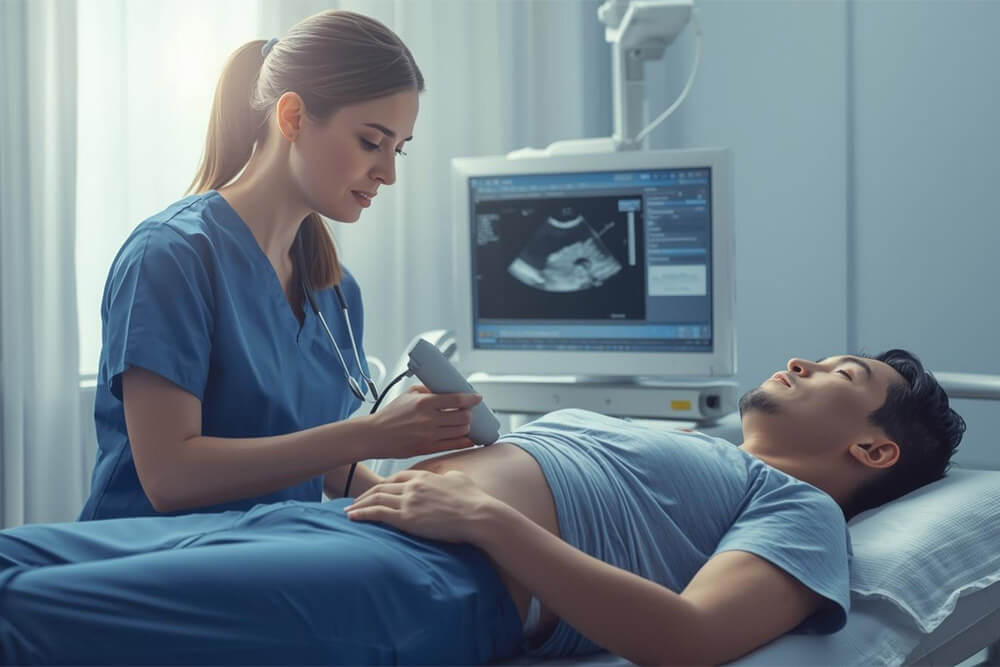
A liver FibroScan is a quick, painless test used to evaluate liver health. It is similar to an ultrasound exam, but it gives specific measurements related to liver stiffness and liver fat.
The test is commonly used to assess:
- Fatty liver disease
- Liver fibrosis
- Cirrhosis risk
- Chronic hepatitis B or C
- Alcohol-related liver disease
- Metabolic dysfunction-associated steatotic liver disease
- Metabolic dysfunction-associated steatohepatitis
- Autoimmune hepatitis
- Genetic liver diseases such as hemochromatosis or Wilson’s disease
- Unexplained abnormal liver blood tests
FibroScan does not require sedation. Most patients can return to normal activities immediately after the test. The exam itself usually takes only a few minutes, though the full appointment may take longer for check-in, positioning, and review.
What Does FibroScan Measure?
FibroScan mainly measures two important liver markers:
1. Liver Stiffness Measurement
Liver stiffness measurement shows how firm or stiff the liver tissue is. This result is usually reported in kilopascals, written as kPa.
Higher stiffness may suggest more liver scarring.
Liver scarring is called fibrosis. Advanced scarring is called cirrhosis. FibroScan helps estimate whether liver damage is mild, moderate, advanced, or possibly cirrhotic.
Why Liver Stiffness Matters
Liver stiffness can help your doctor understand:
- Whether fibrosis may be present
- Whether liver disease is progressing
- Whether cirrhosis risk is increasing
- Whether treatment or lifestyle changes are helping
- Whether more testing is needed
This is important because fibrosis can sometimes be slowed, stabilized, or improved when the underlying cause is treated early.
2. Controlled Attenuation Parameter
Controlled Attenuation Parameter, often called CAP, estimates how much fat is present in the liver. CAP is usually reported in decibels per meter, written as dB/m.
A higher CAP score may suggest more liver fat.
CAP is especially helpful in patients with suspected fatty liver disease, including metabolic dysfunction-associated steatotic liver disease, previously called non-alcoholic fatty liver disease.
Why Liver Fat Measurement Matters
Liver fat can be an early warning sign. Fatty liver may be linked with:
- Type 2 diabetes
- Insulin resistance
- Obesity
- High cholesterol
- High triglycerides
- Metabolic syndrome
- High blood pressure
- Sedentary lifestyle
- Alcohol use in some patients
Not every person with fatty liver develops serious liver disease. However, when fat leads to inflammation and fibrosis, the risk becomes more serious.
FibroScan vs Liver Biopsy
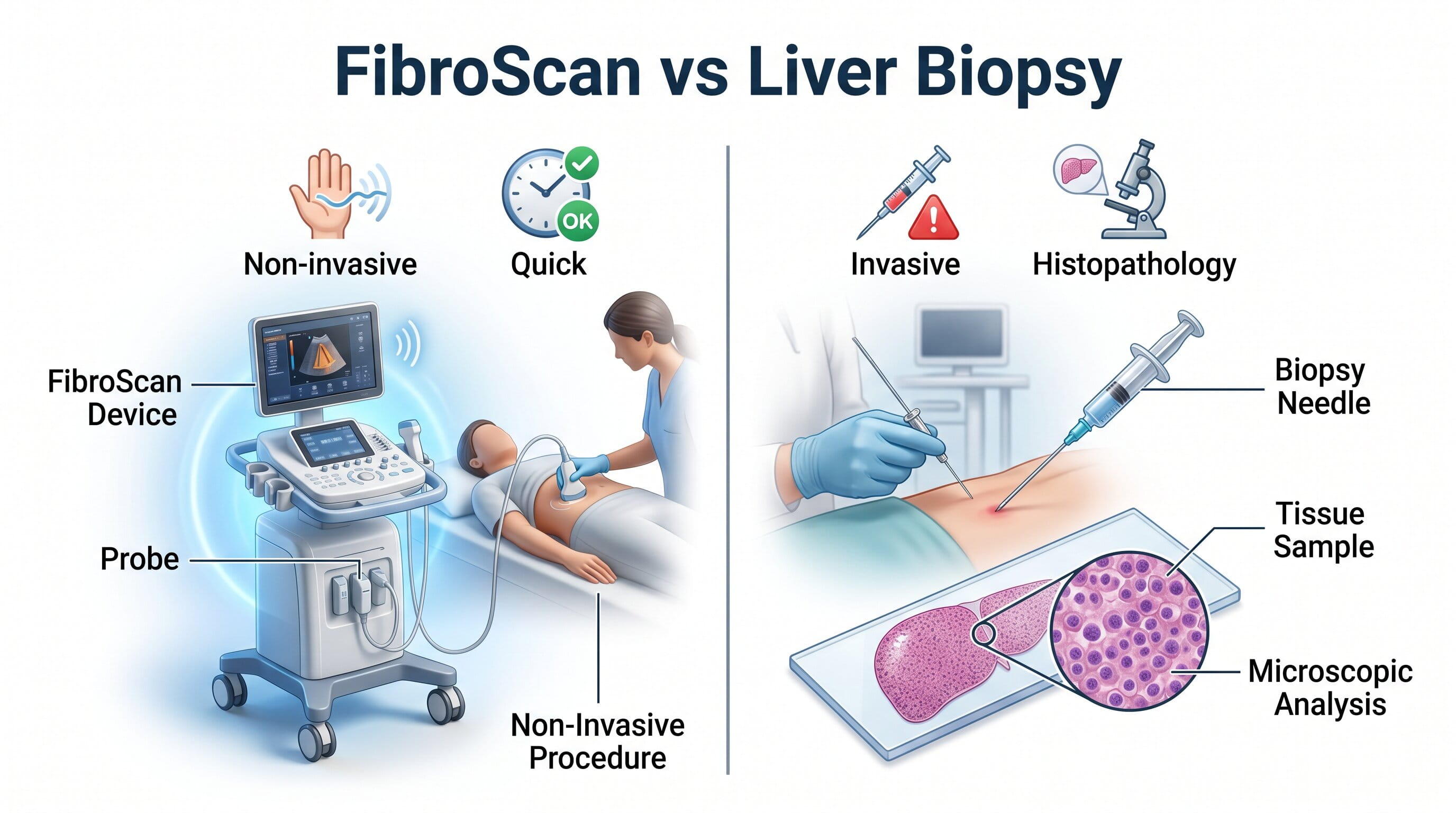
For many years, liver biopsy was the traditional way to assess liver scarring. A biopsy can still be needed in selected cases, but it is invasive because it involves removing a small tissue sample from the liver.
FibroScan is different.
It is:
- Non-invasive
- Needle-free
- Usually painless
- Quick
- Repeatable
- Done without sedation
- Useful for monitoring changes over time
FibroScan does not replace every liver test, but it can reduce the need for invasive testing in many patients. It also helps doctors decide who needs closer monitoring or additional evaluation.
FibroScan vs Regular Liver Ultrasound
A standard liver ultrasound can show the size, shape, and appearance of the liver. It may detect fatty changes, masses, bile duct issues, or other structural findings.
FibroScan gives a different type of information.
It measures liver stiffness and fat more directly using elastography-based technology. In simple terms, a regular ultrasound looks at liver appearance, while FibroScan helps estimate liver texture, stiffness, and fat burden.
Both tests can be useful. Your doctor may recommend one or both depending on your symptoms, bloodwork, risk factors, and previous imaging.
Who Should Consider a FibroScan?
A FibroScan may be recommended if you have abnormal liver blood tests or risk factors for chronic liver disease.
You may need a liver FibroScan if you have:
- Elevated ALT or AST
- Fatty liver seen on ultrasound or CT scan
- Type 2 diabetes
- Obesity or metabolic syndrome
- High triglycerides or high cholesterol
- Long-term alcohol use
- Hepatitis B or hepatitis C
- Known cirrhosis or suspected cirrhosis
- Autoimmune liver disease
- Family history of liver disease
- Unexplained fatigue with abnormal liver tests
- Right upper abdominal discomfort with liver concerns
The American Association for the Study of Liver Diseases recommends non-invasive liver risk assessment pathways for patients with suspected fatty liver disease, and vibration-controlled elastography is commonly used as a secondary assessment when fibrosis risk needs clarification.
Why FibroScan Is Important for Fatty Liver Disease
Fatty liver disease is one of the most common reasons doctors order FibroScan.
The challenge with fatty liver is that symptoms are often absent. A patient may not know anything is wrong until liver enzymes rise or imaging shows fat in the liver.
FibroScan helps answer two critical questions:
Is There Fat in the Liver?
CAP score helps estimate the amount of fatty change.
Is There Scarring in the Liver?
Liver stiffness helps estimate fibrosis risk.
This distinction is important. A person may have liver fat without advanced scarring. Another person may have fat plus fibrosis, which requires closer follow-up and more aggressive risk reduction.
FibroScan and MASLD
MASLD stands for metabolic dysfunction-associated steatotic liver disease. This is the newer term often used for fatty liver related to metabolic risk factors.
MASLD is commonly associated with:
- Diabetes
- Weight gain
- Insulin resistance
- High cholesterol
- High triglycerides
- High blood pressure
- Central abdominal weight
FibroScan can help identify which MASLD patients may have a higher risk of liver scarring.
FibroScan and MASH
MASH stands for metabolic dysfunction-associated steatohepatitis. This is a more serious form of fatty liver disease where fat is associated with inflammation and liver cell injury.
MASH matters because it can progress to fibrosis, cirrhosis, liver failure, or liver cancer in some patients.
FibroScan does not diagnose every detail of MASH by itself, but it helps detect the fibrosis risk that makes MASH clinically important.
What Happens During a FibroScan?
The test is simple for most patients.
You usually lie on your back with your right arm raised above your head. This opens the space around the right rib cage so the liver can be scanned.
A provider places gel on the skin and positions the FibroScan probe over the liver area. You may feel a light tapping or vibration as the device sends ultrasound waves through the liver.
The test does not involve:
- Needles
- Anesthesia
- Incisions
- Radiation
- Recovery time
After the scan, you can usually drive yourself home and continue your normal day.
How to Prepare for a FibroScan
Preparation may vary by clinic, but common instructions include:
- Do not eat or drink for about 3 hours before the test
- Wear loose, comfortable clothing
- Bring your insurance card and ID
- Bring a list of current medications
- Arrive early for check-in
- Follow any clinic-specific instructions
Eating before the test can affect liver stiffness readings, so fasting instructions are important.
What Do FibroScan Results Mean?
FibroScan results should always be interpreted by a qualified provider. Numbers can vary based on the liver condition, body type, inflammation, congestion, recent food intake, and other factors.
In general:
- Lower liver stiffness usually suggests less scarring
- Higher liver stiffness may suggest more fibrosis
- Higher CAP score may suggest more liver fat
- Results must be compared with blood tests, imaging, history, and risk factors
Some patient education resources describe a normal liver stiffness range as roughly 2 to 6 kPa, while higher results may suggest increasing fibrosis risk. However, exact cutoffs can vary by disease type and clinical context.
Can FibroScan Detect Cirrhosis?
FibroScan can help estimate the likelihood of cirrhosis by measuring liver stiffness. Cirrhosis usually causes the liver to become much stiffer than normal liver tissue.
However, FibroScan is not the only factor used to diagnose cirrhosis.
Doctors may also consider:
- Platelet count
- Liver enzymes
- Albumin
- Bilirubin
- INR
- Ultrasound or MRI findings
- Spleen size
- Signs of portal hypertension
- Symptoms and physical exam findings
If results suggest advanced fibrosis or cirrhosis, your doctor may recommend closer monitoring and additional testing.
Can FibroScan Replace Blood Tests?
No. FibroScan does not replace liver blood tests.
It adds information that blood tests cannot always provide.
Blood tests can show inflammation or liver function changes. FibroScan helps estimate stiffness and fat. Together, they give a more complete liver health picture.
Your doctor may combine FibroScan with:
- Liver function tests
- Complete blood count
- Hepatitis testing
- Iron studies
- Autoimmune liver markers
- Ultrasound
- MRI
- FIB-4 score
- ELF test
- Other fibrosis assessment tools
Benefits of FibroScan
FibroScan is valuable because it is patient-friendly and clinically useful.
Key benefits include:
- Helps detect liver scarring early
- Measures liver fat and stiffness
- Helps assess fatty liver severity
- Reduces reliance on invasive biopsy in many cases
- Helps monitor liver disease over time
- Can be repeated safely
- Requires no sedation
- Has no recovery period
- Helps guide lifestyle and treatment decisions
For patients with fatty liver disease, FibroScan can be especially motivating because it gives measurable data. Patients and providers can track whether weight loss, diabetes control, alcohol reduction, diet changes, or medications are improving liver risk over time.
Limitations of FibroScan
FibroScan is powerful, but it is not perfect.
Results may be affected by:
- Recent eating
- Severe inflammation
- Fluid buildup
- Heart-related liver congestion
- Body habitus
- Narrow rib spaces
- Operator technique
- Certain acute illnesses
Also, FibroScan estimates fibrosis. It does not identify every possible liver disease by itself.
This is why results should be reviewed by a gastroenterologist, hepatologist, or trained liver specialist.
Symptoms That May Lead to Liver Testing
Many patients with liver disease have no symptoms. When symptoms occur, they may be vague.
Possible symptoms include:
- Fatigue
- Right upper abdominal discomfort
- Bloating
- Nausea
- Loss of appetite
- Unexplained weight changes
- Itching
- Yellowing of the skin or eyes
- Swelling in the legs or abdomen
- Easy bruising
- Dark urine
- Pale stools
Yellow skin, vomiting blood, black stools, confusion, severe abdominal swelling, or worsening jaundice should be treated as urgent warning signs.
Why Early Liver Fibrosis Detection Matters
Liver fibrosis can progress silently. The earlier it is found, the more opportunity there is to address the cause.
Depending on the diagnosis, treatment may include:
- Weight loss support
- Diabetes control
- Cholesterol management
- Alcohol reduction or avoidance
- Hepatitis treatment
- Medication review
- Nutrition counseling
- Monitoring for cirrhosis complications
- Additional liver imaging or labs
The goal is not just to get a number. The goal is to understand risk and create a plan.
What Makes a Strong FibroScan Evaluation?
A strong FibroScan evaluation should not stop at the scan.
The best approach includes:
- Reviewing liver enzymes
- Checking metabolic risk factors
- Reviewing alcohol history
- Looking at medications and supplements
- Checking for viral hepatitis when appropriate
- Reviewing prior imaging
- Explaining CAP and stiffness results clearly
- Creating a follow-up plan
- Monitoring progress over time
This is where a GI liver specialist can help patients move from “I have fatty liver” to “I understand my liver risk and what to do next.”

When to See a Gastroenterologist for FibroScan Results
You should consider seeing a gastroenterologist if:
- Your liver enzymes are high
- Imaging showed fatty liver
- Your FibroScan score is abnormal
- You have diabetes and fatty liver
- You have obesity with abnormal liver tests
- You drink alcohol regularly and have liver concerns
- You have hepatitis B or C
- You were told you may have fibrosis or cirrhosis
- You have a family history of liver disease
- You are unsure what your liver scan results mean
A gastroenterologist can interpret FibroScan results in context and decide whether you need lifestyle treatment, medications, monitoring, additional imaging, or referral-level liver care.
GastroDoxs Approach to Liver FibroScan Care
At GastroDoxs, liver testing is not treated as a standalone number. Dr. Bharat Pothuri and the GastroDoxs team evaluate FibroScan findings alongside symptoms, bloodwork, medical history, metabolic risk, and prior imaging.
This helps patients understand:
- Whether liver fat is present
- Whether fibrosis risk is low, moderate, or high
- Whether additional testing is needed
- What lifestyle or medical changes may help
- How often liver health should be monitored
- When advanced liver disease needs closer care
For patients in the Houston area, including Cypress, Katy, and nearby communities, FibroScan can be an important step toward earlier liver disease detection and better long-term planning.