
What is SIBO?
Small Intestinal Bacterial Overgrowth (SIBO) is a condition where there is an abnormal increase in the number of bacteria in the small intestine. Normally, the small intestine contains fewer bacteria compared to the large intestine. In SIBO, however, bacteria from the colon migrate into the small intestine, disrupting digestion and causing a range of symptoms.
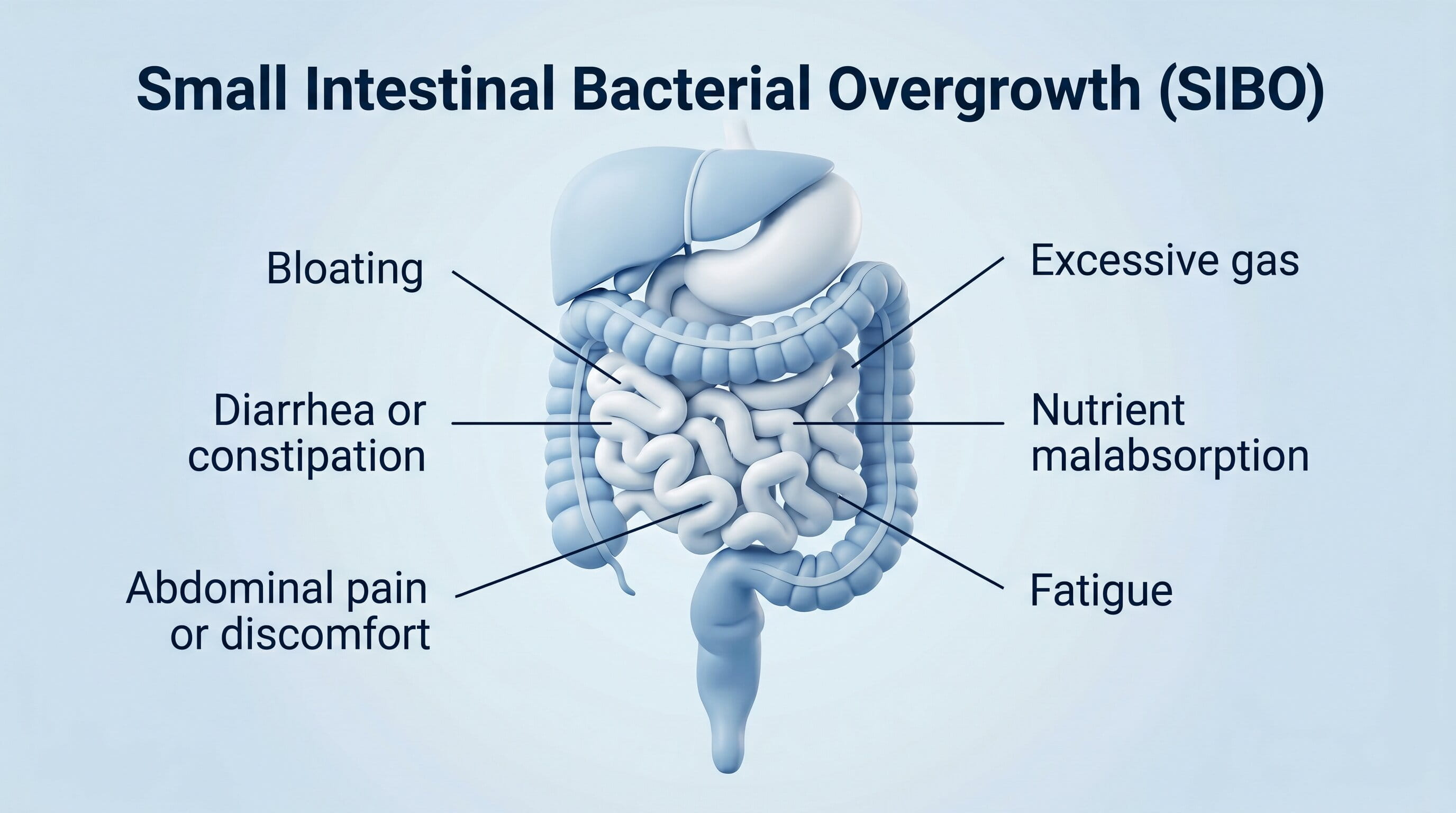
Common symptoms of SIBO include:
- Bloating
- Diarrhea or constipation
- Abdominal pain or discomfort
- Nutrient malabsorption (leading to weight loss and fatigue)
- Excessive gas
SIBO can occur due to several factors, including gastrointestinal motility disorders, intestinal surgery, or conditions like Celiac Disease or Diabetes.
What is IBS (Irritable Bowel Syndrome)?
Irritable Bowel Syndrome (IBS) is a functional gastrointestinal disorder characterized by a group of symptoms, including abdominal pain, bloating, and changes in bowel habits (either diarrhea, constipation, or alternating between both). Unlike SIBO, IBS does not involve an overgrowth of bacteria but rather a dysfunction of the gut's motility, sensitivity, and secretion mechanisms.
Common symptoms of IBS include:
- Abdominal pain or discomfort
- Bloating and cramping
- Diarrhea or constipation (or alternating between the two)
- Mucus in stool
- A feeling of incomplete bowel movements
IBS is thought to be caused by a combination of gut-brain axis dysregulation, motility disturbances, and altered gut microbiota, but no clear underlying pathology or infection is present.
How SIBO and IBS Overlap
SIBO and IBS share several common symptoms, making it challenging to differentiate between the two. Both conditions can cause:
- Bloating
- Abdominal discomfort
- Diarrhea or constipation
- Fatigue
In fact, many people with IBS may also have SIBO, a condition sometimes referred to as "IBS with SIBO". This overlap complicates diagnosis and treatment since the treatment approaches for the two conditions are quite different.
Key Differences Between SIBO and IBS
SIBO and IBS differ in their underlying causes, symptom patterns, diagnostic methods, and treatment approaches.
Cause of Symptoms
- SIBO is caused by an overgrowth of bacteria in the small intestine, disrupting digestion and nutrient absorption.
- IBS is a functional disorder with no detectable abnormalities, typically linked to motility issues, gut-brain axis dysfunction, and hypersensitivity of the gut.
Symptoms Specificity
- SIBO symptoms are often more severe and related to malabsorption (e.g., nutrient deficiencies, weight loss) due to disrupted digestion in the small intestine.
- IBS primarily affects bowel movements and often involves alternating constipation and diarrhea, with less concern for nutrient malabsorption.
Diagnosis
- SIBO is diagnosed through breath tests (lactulose or glucose breath test), which measure the amount of hydrogen or methane produced by bacteria in the small intestine.
- IBS is diagnosed primarily through a clinical evaluation after ruling out other causes, using criteria like the Rome IV criteria for IBS diagnosis.
Treatment Approaches
- SIBO treatment involves addressing the bacterial overgrowth through antibiotics (like Rifaximin) or herbal treatments, along with dietary changes (e.g., Low FODMAP diet, Elemental diet).
- IBS treatment focuses on symptom management, including dietary changes (e.g., FODMAP reduction), fiber supplements, anti-spasmodic medications, and stress management.
How to Differentiate SIBO from IBS
Although SIBO and IBS share overlapping symptoms, certain clinical patterns and diagnostic clues can help distinguish between the two conditions.
Consider the Bowel Movements
- IBS: IBS often presents with alternating diarrhea and constipation or one of these symptoms consistently.
- SIBO: Though diarrhea and constipation are common in both conditions, SIBO often causes more persistent diarrhea (due to rapid fermentation in the small intestine) or constipation when there is an imbalance in bacterial strains.
Look for Bloating
- SIBO: Severe and persistent bloating often occurs due to the overproduction of gas by the bacteria in the small intestine.
- IBS: Bloating in IBS is also common but typically less severe and more linked to bowel movement irregularity.
Test for Malabsorption
- SIBO: If nutrient malabsorption is present (e.g., weight loss, fatigue, anemia), it points toward SIBO as the likely cause.
- IBS: IBS typically does not cause malabsorption, as it is not a disease of digestion but a motility disorder.
Conduct Testing
- SIBO: Breath tests (glucose or lactulose) are the gold standard in diagnosing SIBO.
- IBS: Diagnosis is made through clinical evaluation based on symptoms (Rome IV criteria) and exclusion of other conditions (e.g., SIBO, IBD, etc.).
Managing SIBO and IBS Together
For individuals diagnosed with both SIBO and IBS, managing both conditions simultaneously is crucial for improving symptoms. A targeted treatment plan is needed, focusing on reducing bacterial overgrowth through antibiotics and adjusting the diet to support gut health and address IBS symptoms.
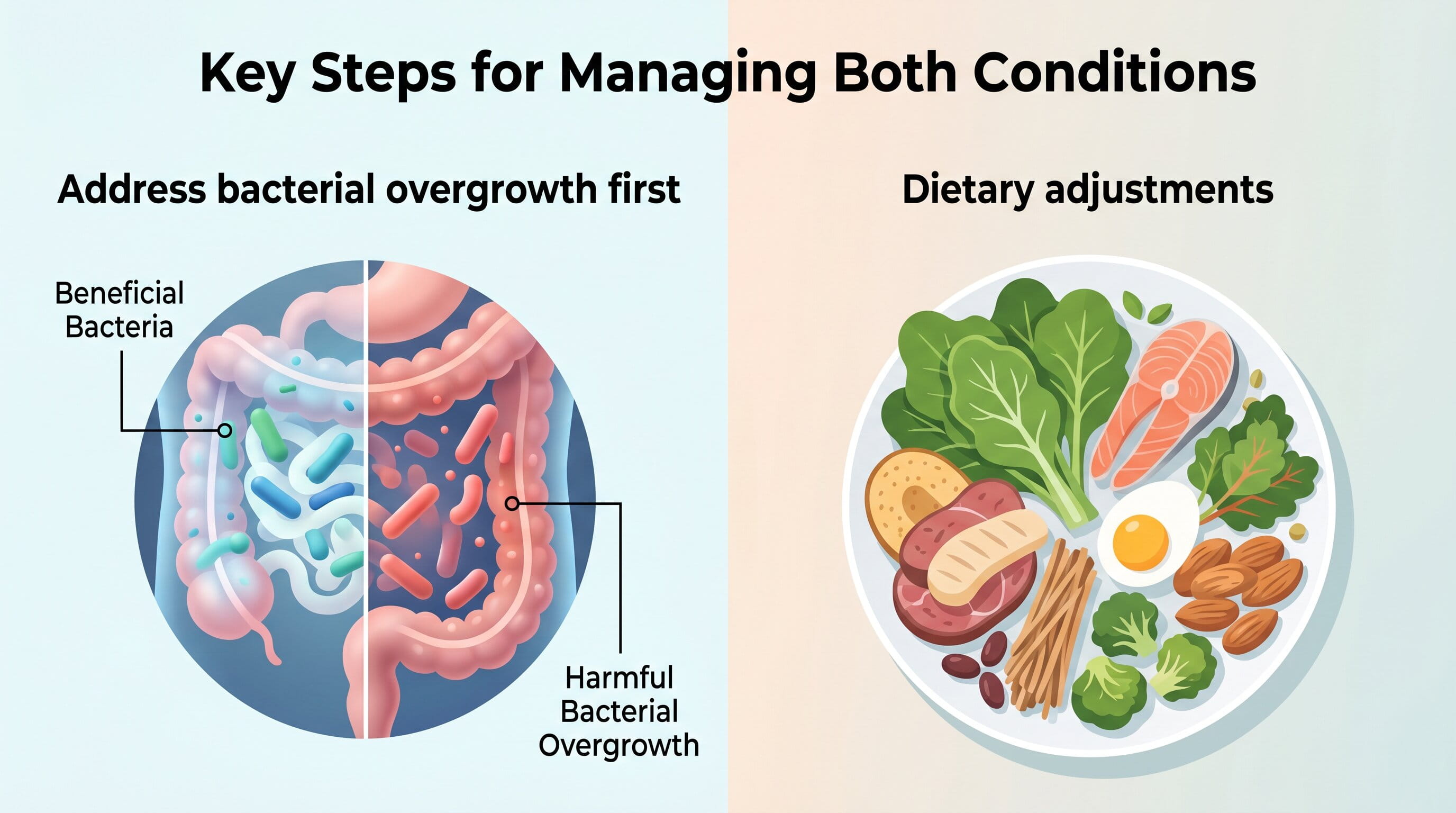
Key Steps for Managing Both Conditions:
- Address bacterial overgrowth first: Use antibiotics or herbs to reduce SIBO symptoms.
- Dietary adjustments: A Low FODMAP diet can help manage both IBS and SIBO symptoms. Consult a dietitian to determine which foods trigger symptoms.
- Probiotics and gut-healing supplements: Be cautious with probiotics, as they can worsen SIBO but may benefit IBS once SIBO is treated.
Conclusion
Differentiating SIBO from IBS is crucial for determining the right treatment and improving digestive health. While both conditions share common symptoms, understanding their key differences—such as cause, diagnosis, and treatment—is essential for effective management.
If you suspect you have either condition, it’s important to seek guidance from a healthcare provider, preferably a gastroenterologist, for accurate diagnosis and a tailored treatment plan.