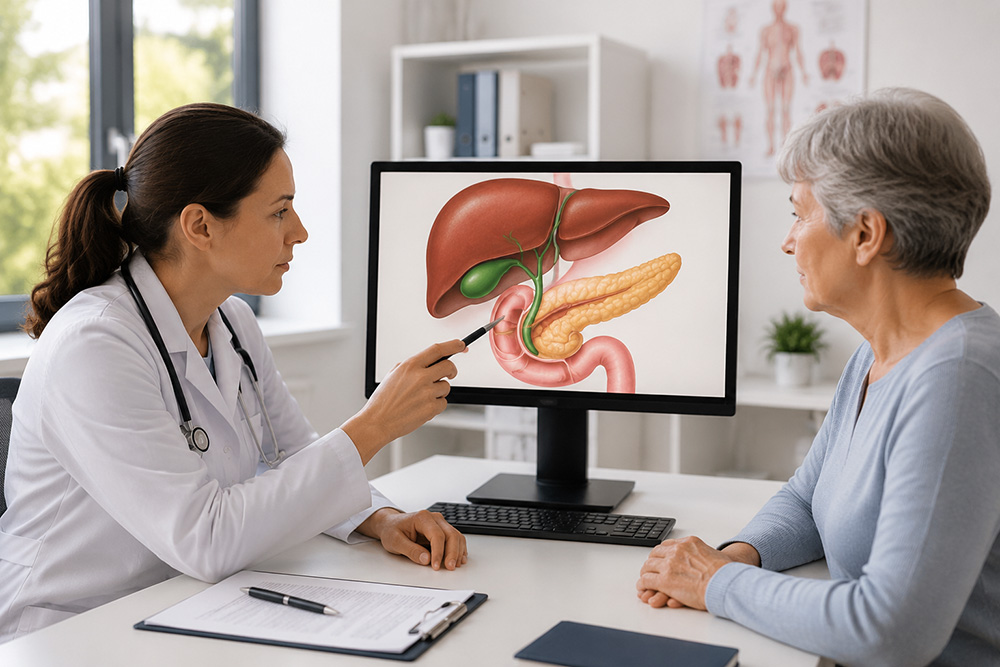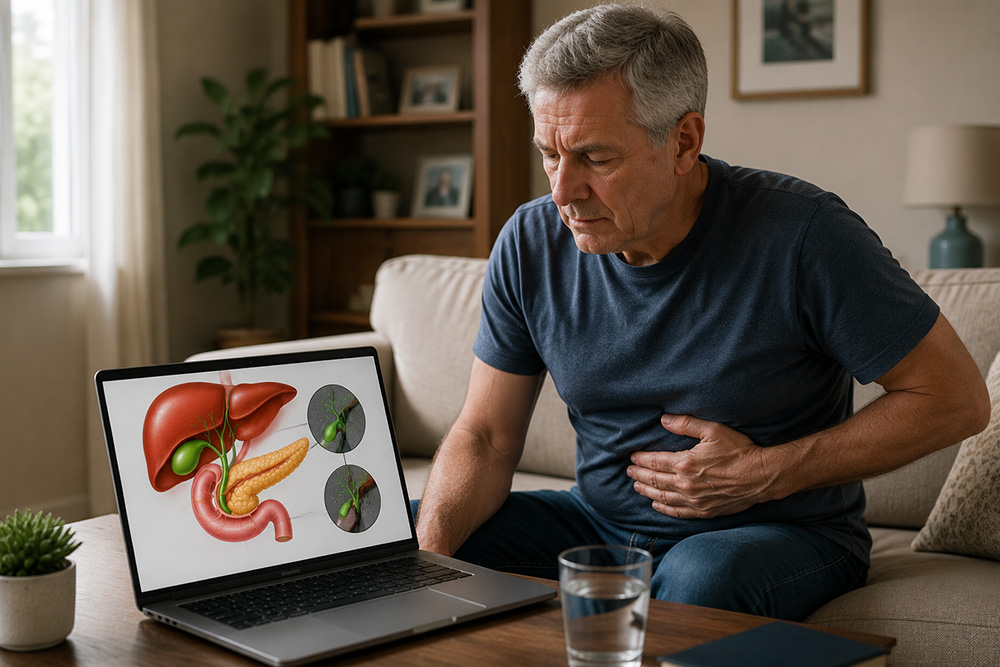
A dilated common bile duct is serious when it is linked with jaundice, fever, severe or worsening abdominal pain, abnormal liver tests, pancreatitis, weight loss, or concerning imaging findings. It may be less concerning when found incidentally in an older adult or after gallbladder removal with normal labs and no symptoms.
Key Takeaways
- A dilated common bile duct is an imaging finding, not a final diagnosis.
- Symptoms, liver blood tests, age, gallbladder history, and imaging details decide how concerning the finding is.
- Gallstones, strictures, inflammation, pancreatitis, and less commonly tumors can block bile flow and cause duct widening.
- MRCP and EUS are commonly used for diagnosis; ERCP is usually reserved when treatment may be needed.
The finding can be low risk or high risk
CBD dilation is not judged by the measurement alone. A duct can be mildly wide because of age-related change, previous gallbladder removal, or medication effects. It can also widen when bile cannot drain normally. The important question is whether there are signs of obstruction, infection, pancreatitis, or a mass.
Red flags that raise concern
Red flags include yellowing of the eyes or skin, dark urine, pale stools, fever, chills, intense right upper abdominal pain, persistent vomiting, unexplained weight loss, abnormal bilirubin or liver enzymes, and a pancreatic duct that is also dilated. These features make additional evaluation more important.
Why liver tests matter
Liver blood tests can help show whether bile flow is blocked or irritated. High bilirubin, alkaline phosphatase, AST, ALT, or GGT may push the evaluation toward MRCP, EUS, or ERCP depending on the pattern and symptoms. Normal labs do not rule out every cause, but they often lower the urgency when the patient feels well.
Why imaging details matter
Radiology reports may mention whether the duct tapers smoothly, whether stones are seen, whether the pancreatic duct is enlarged, whether there is intrahepatic duct dilation, or whether a mass is suspected. These details help separate benign prominence from a finding that deserves faster evaluation.
When it may be less concerning
Mild dilation may be less concerning in adults over 60, patients who had gallbladder removal, and patients taking opioids, especially when there is no pain, no jaundice, and normal liver blood tests. Even then, the finding should be documented and interpreted by a clinician.
The safest approach
The safest approach is not panic and not dismissal. Review the imaging report, symptoms, and blood tests together. If the picture is unclear, a gastroenterologist can decide whether observation, repeat labs, MRCP, EUS, or treatment-focused ERCP is the right next step.