The timing of colonoscopy after adenoma removal depends on risk. One or two small low-risk tubular adenomas may allow a longer interval, while large adenomas, multiple adenomas, villous features, high-grade dysplasia, or incomplete removal usually require earlier surveillance. Your gastroenterologist should individualize the interval.
Why Follow-Up Timing Is Personalized
Adenoma follow-up is not a one-size-fits-all schedule. The right interval depends on what the colonoscopy found and how confident the doctor is that the exam was complete. The goal is to prevent cancer while avoiding unnecessary procedures. A patient with one small tubular adenoma is managed differently from a patient with several adenomas, a large lesion, or advanced pathology.
Low-Risk Findings
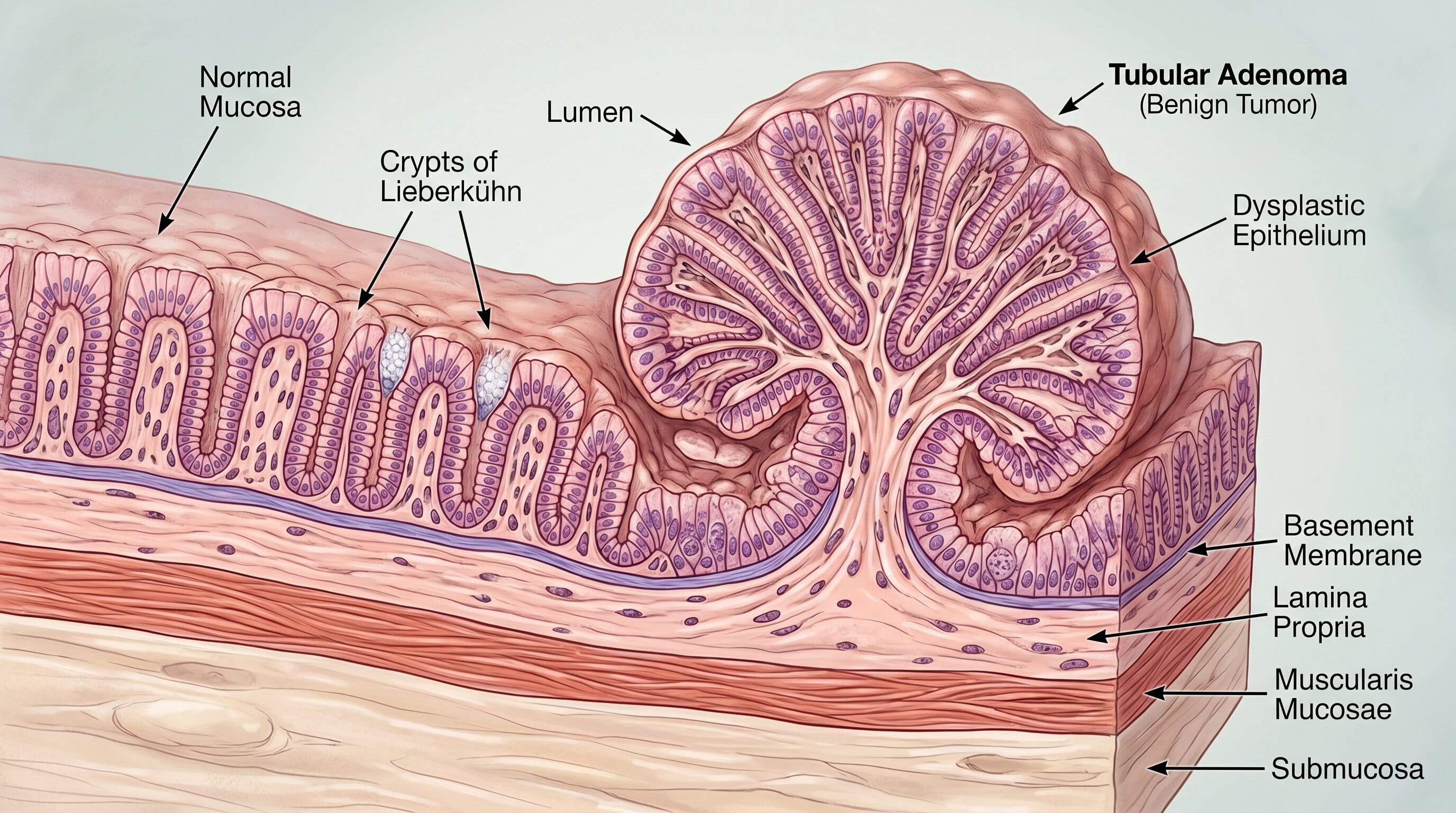
Low-risk findings generally involve one or two small tubular adenomas that are completely removed during a high-quality exam. These patients often qualify for a longer surveillance interval than patients with advanced findings. However, the final interval should account for bowel prep quality, family history, prior colonoscopy findings, and other risk factors.
Higher-Risk Findings
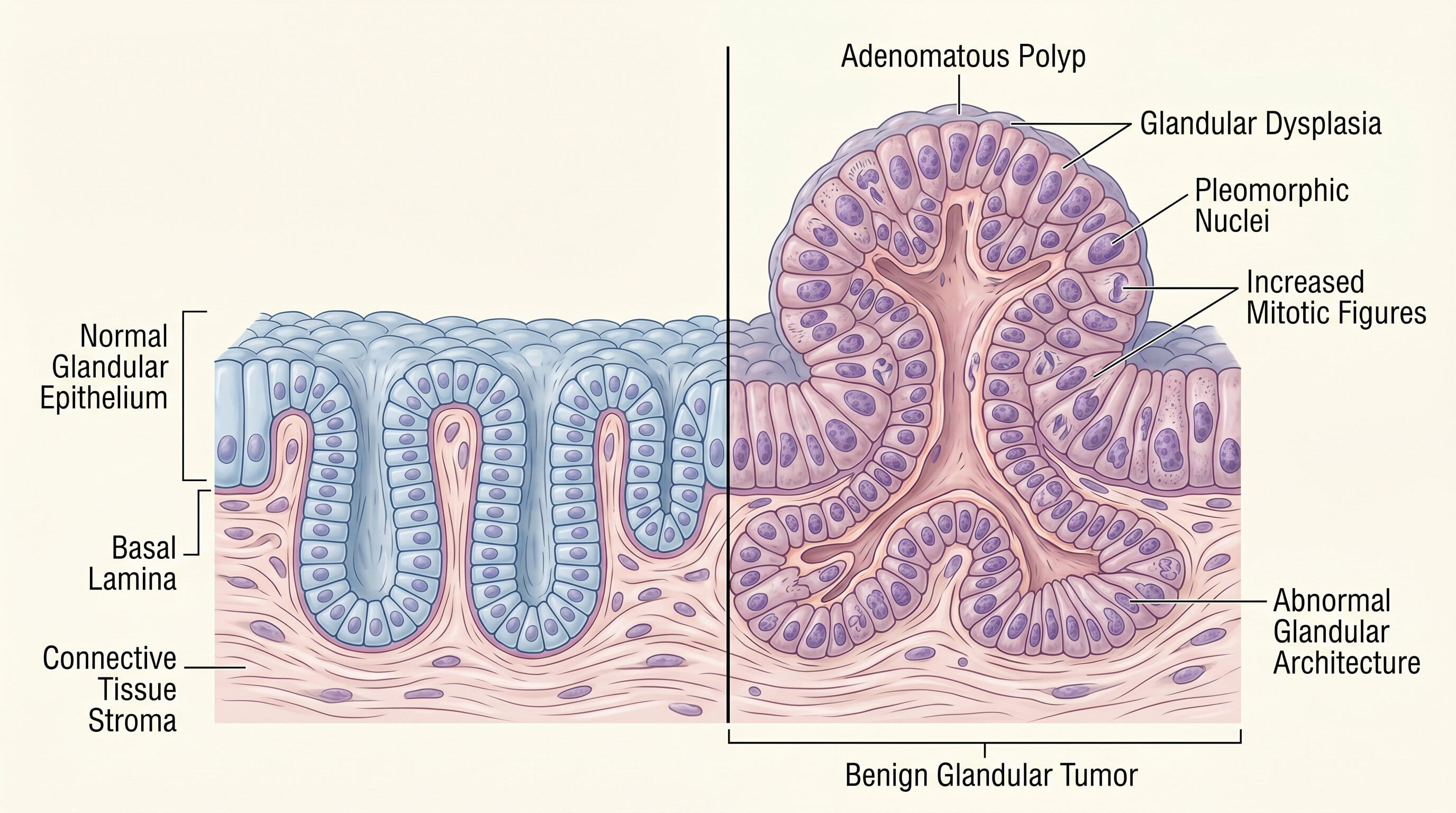
Higher-risk findings may include three or more adenomas, any adenoma 10 mm or larger, villous or tubulovillous features, high-grade dysplasia, numerous adenomas, or piecemeal removal of a large lesion. These features can increase the chance of future advanced neoplasia and usually lead to closer surveillance.
Serrated Lesion Follow-Up
Sessile serrated lesions have their own follow-up considerations. Their risk depends on size, number, dysplasia, location, and completeness of removal. Because these lesions can be flat and subtle, clear documentation and high-quality removal are especially important. Patients should not assume serrated means harmless.
Why Bowel Prep Changes the Plan
If bowel preparation was poor, the doctor may not be confident that all lesions were seen. Even if a polyp was removed, an earlier repeat may be recommended because missed lesions are possible. Good prep at the next exam can help reset confidence and improve long-term planning.
What Patients Should Keep
Patients should keep the colonoscopy report, pathology report, and recommended recall date. The report should list the number of polyps, size, location, method of removal, and whether retrieval was successful. This information prevents confusion when changing doctors or scheduling future care.
Do Not Guess Your Interval
Many patients remember being told three years, five years, seven years, or ten years, but they may not know why. Guessing can be risky. The safest approach is to ask the gastroenterology office to confirm the recommended interval in writing. If you had advanced findings, multiple adenomas, or family history, specialist review is important.
When to Schedule Earlier
Schedule earlier evaluation if you develop rectal bleeding, black stools, unexplained anemia, new bowel habit changes, positive stool testing, or persistent abdominal symptoms. At GastroDoxs, patients in Cypress, Katy, Jersey Village, and Greater Houston can receive colonoscopy-based evaluation, polyp removal, and follow-up planning from a digestive health team led by Dr. Bharat Pothuri.
How to Read the Colonoscopy and Pathology Reports
For how often do you need colonoscopy after adenoma removal?, the colonoscopy report and pathology report should be read together. The colonoscopy report usually documents location, size, shape, removal method, bowel preparation quality, and whether the exam reached the intended portion of the colon. The pathology report confirms tissue type and dysplasia. Patients should not rely on memory alone because small details can change follow-up timing. A report that says one small tubular adenoma is different from a report that lists a large adenoma, multiple adenomas, villous features, high-grade dysplasia, or piecemeal resection. Keeping these reports helps future doctors avoid repeating tests too early or waiting too long.
Patient Questions That Improve Follow-Up
The best visit after an adenoma finding should end with clear answers. Patients can ask: What type of adenoma or serrated lesion was found? How many were removed? What was the largest size? Was removal complete? Did the pathology show dysplasia? Was the bowel prep good enough? When should the next colonoscopy happen? Does my family history change the plan? These questions make the visit more useful and support safer long-term prevention. They also reduce anxiety because the patient understands why the follow-up interval was chosen.
Lifestyle and Risk Reduction After an Adenoma
Lifestyle changes cannot remove an adenoma that already exists, but they can support future risk reduction. Practical steps include staying current with colonoscopy surveillance, avoiding tobacco, limiting alcohol, maintaining a healthy weight, increasing physical activity, and choosing a diet pattern that includes fiber-rich foods, fruits, vegetables, and fewer processed meats. Patients should also manage diabetes, inflammatory bowel disease, and other medical conditions with their clinicians. The goal is not perfection. The goal is to combine medical prevention with realistic habits that support colon health over time
Warning Signs That Need Prompt Medical Attention
Contact a healthcare professional promptly if you have any of the following:
- Rectal bleeding or black stools
- New or unexplained iron deficiency anemia
- Unintentional weight loss
- Persistent change in bowel habits
- Family history of colorectal cancer or advanced polyps
- A positive stool-based screening test
- Abdominal pain with vomiting, fever, or worsening weakness
GastroDoxs Care Note
At GastroDoxs, patients in Cypress, Katy, Jersey Village, and Greater Houston can receive colonoscopy-based evaluation, polyp removal, and follow-up planning from a digestive health team led by Dr. Bharat Pothuri.
Key Takeaways
Follow-up colonoscopy timing is based on risk, not anxiety or convenience. The most important factors are adenoma number, size, histology, dysplasia, completeness of removal, and exam quality. Staying on schedule is one of the strongest ways to reduce colorectal cancer risk after an adenoma.