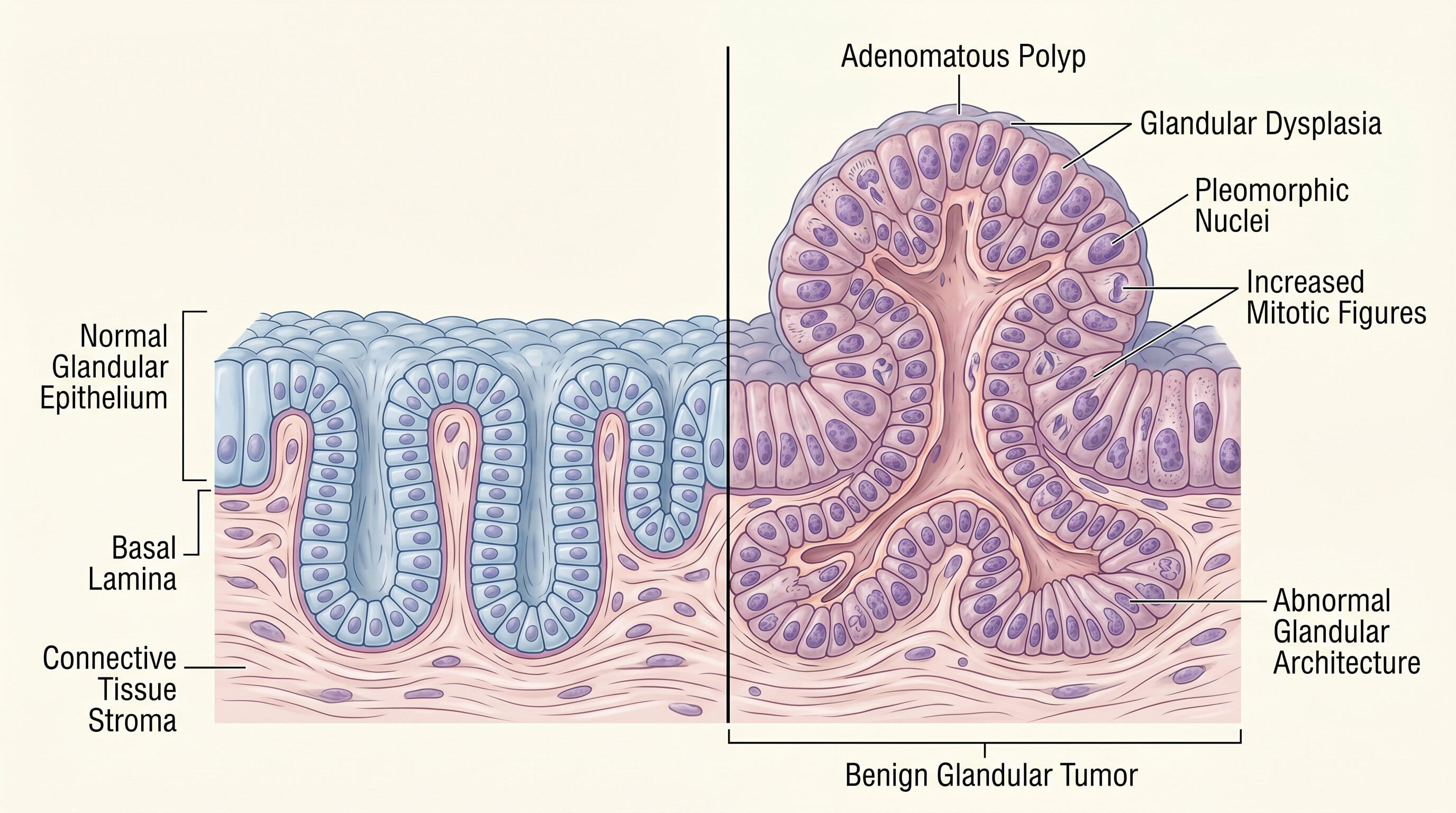
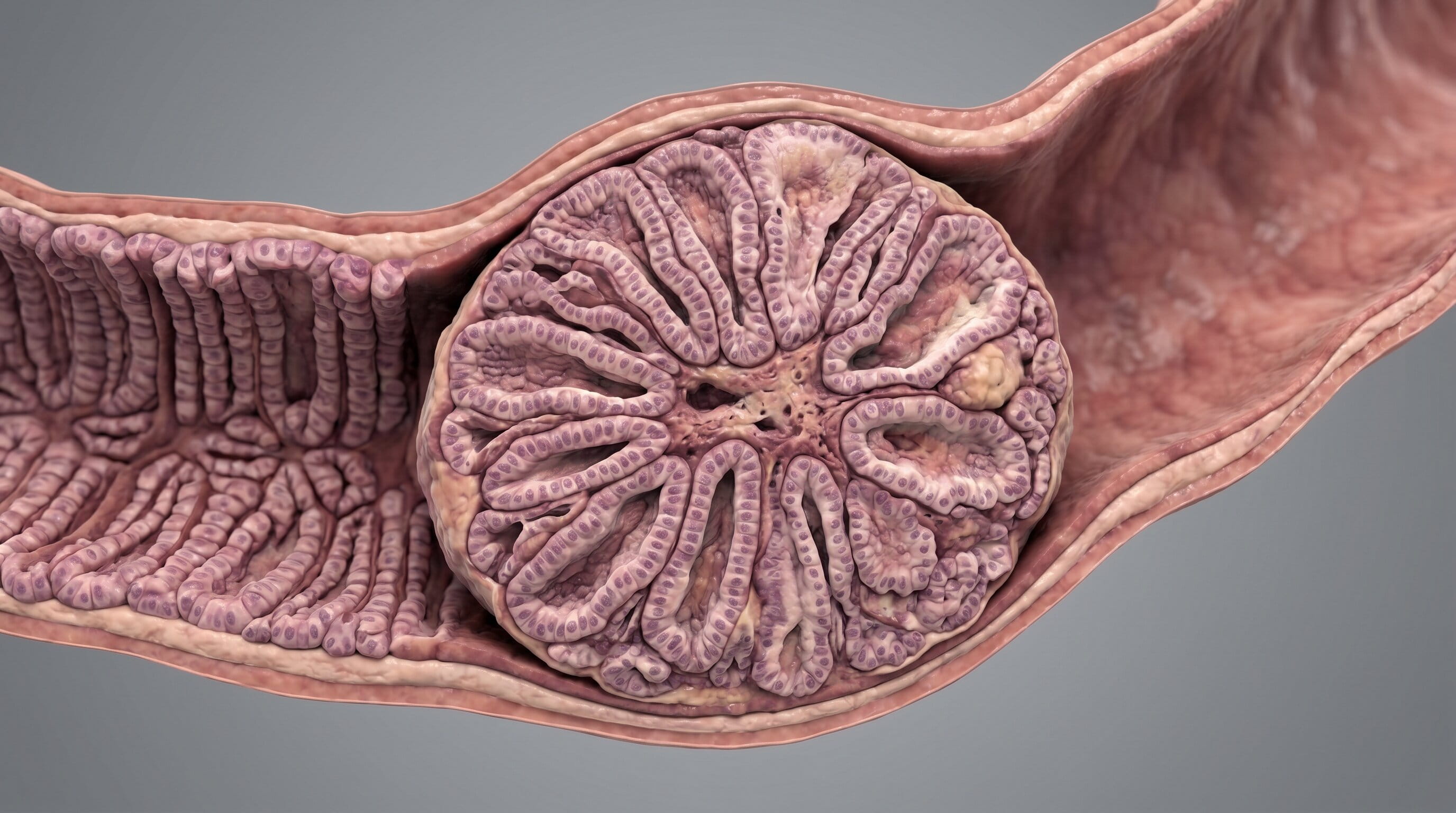
Adenomas are found during colonoscopy by visually examining the colon lining with a flexible camera. The doctor looks for raised, flat, or subtle lesions, removes them when safe, retrieves tissue, and sends it to pathology to confirm whether the polyp is an adenoma or another type.
Why Colonoscopy Is Different From Stool Testing
Stool tests can detect hidden blood or abnormal DNA signals, but they do not remove polyps. Colonoscopy allows direct visualization and treatment in the same procedure. This makes it especially valuable for adenoma prevention. If a stool-based test is positive, colonoscopy is usually needed to find the source and remove suspicious lesions.
Preparation Affects Detection
Adenoma detection begins before the procedure. A clean colon allows the gastroenterologist to see the lining clearly. Poor bowel preparation can hide small or flat lesions and may lead to an earlier repeat exam. Patients should follow prep instructions closely, including diet changes, timing of laxatives, and medication guidance. Good preparation improves safety, completeness, and confidence in the findings.
What the Doctor Looks For
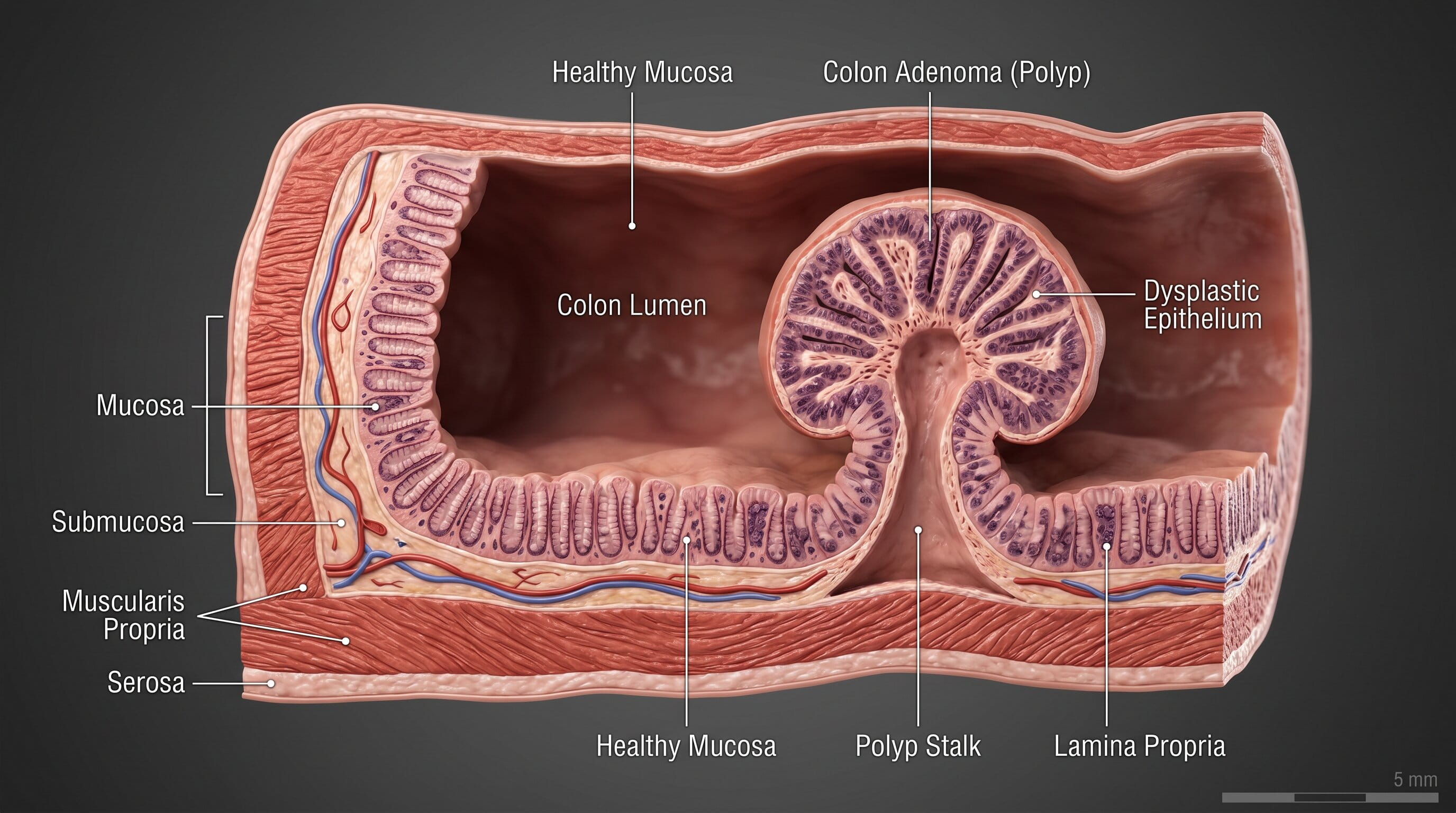
Adenomas can look different. Some are raised like small bumps. Some have a stalk. Others are flat or slightly depressed and harder to see. Serrated lesions may be pale, covered by mucus, or blend with normal folds. The doctor uses careful technique, adequate withdrawal time, cleaning, suction, and sometimes enhanced imaging to inspect the colon.
Removal During the Same Procedure
When a suspected adenoma is found, it is often removed during colonoscopy. Small lesions may be removed with forceps or a snare. Larger lesions may require snare cautery, injection-assisted techniques, piecemeal removal, or referral for advanced endoscopic resection. Very large or suspicious lesions may require a different plan. The goal is complete removal while maintaining safety.
Pathology Confirms the Diagnosis
The endoscopy appearance is important, but pathology gives the final answer. The tissue is examined for type, dysplasia, margins when relevant, and cancer features. This report determines whether the lesion was a tubular adenoma, tubulovillous adenoma, villous adenoma, sessile serrated lesion, or another type. Patients should request and keep both the colonoscopy report and pathology report.
Quality Factors That Matter
A high-quality colonoscopy depends on complete exam to the cecum when appropriate, adequate bowel prep, careful inspection, safe removal, complete retrieval of tissue, and clear documentation. The report should describe polyp number, size, location, method of removal, and whether resection was complete. These details are important for future surveillance.
After the Procedure
After colonoscopy, patients may feel bloated or tired from sedation. The doctor may discuss immediate findings, but the final adenoma type may take pathology processing. Patients should follow instructions about activity, diet, medication restart, and warning symptoms such as heavy bleeding, severe pain, fever, or dizziness.
When Colonoscopy Should Not Be Delayed
Do not delay evaluation for rectal bleeding, positive stool testing, unexplained anemia, persistent bowel habit changes, or a family history that requires earlier screening. At GastroDoxs, patients in Cypress, Katy, Jersey Village, and Greater Houston can receive colonoscopy-based evaluation, polyp removal, and follow-up planning from a digestive health team led by Dr. Bharat Pothuri.
How to Read the Colonoscopy and Pathology Reports
For how are adenomas found during colonoscopy?, the colonoscopy report and pathology report should be read together.
The colonoscopy report usually documents location, size, shape, removal method, bowel preparation quality, and whether the exam reached the intended portion of the colon.
The pathology report confirms tissue type and dysplasia.
Patients should not rely on memory alone because small details can change follow-up timing.
A report that says one small tubular adenoma is different from a report that lists a large adenoma, multiple adenomas, villous features, high-grade dysplasia, or piecemeal resection.
Keeping these reports helps future doctors avoid repeating tests too early or waiting too long.
Patient Questions That Improve Follow-Up
The best visit after an adenoma finding should end with clear answers.
Patients can ask: What type of adenoma or serrated lesion was found? How many were removed? What was the largest size? Was removal complete? Did the pathology show dysplasia? Was the bowel prep good enough? When should the next colonoscopy happen? Does my family history change the plan?
These questions make the visit more useful and support safer long-term prevention.
They also reduce anxiety because the patient understands why the follow-up interval was chosen.
Lifestyle and Risk Reduction After an Adenoma
Lifestyle changes cannot remove an adenoma that already exists, but they can support future risk reduction.
Practical steps include staying current with colonoscopy surveillance, avoiding tobacco, limiting alcohol, maintaining a healthy weight, increasing physical activity, and choosing a diet pattern that includes fiber-rich foods, fruits, vegetables, and fewer processed meats.
Patients should also manage diabetes, inflammatory bowel disease, and other medical conditions with their clinicians.
The goal is not perfection. The goal is to combine medical prevention with realistic habits that support colon health over time.
Warning Signs That Need Prompt Medical Attention
Contact a healthcare professional promptly if you have any of the following:
- Rectal bleeding or black stools
- New or unexplained iron deficiency anemia
- Unintentional weight loss
- Persistent change in bowel habits
- Family history of colorectal cancer or advanced polyps
- A positive stool-based screening test
- Abdominal pain with vomiting, fever, or worsening weakness
GastroDoxs Care Note
At GastroDoxs, patients in Cypress, Katy, Jersey Village, and Greater Houston can receive colonoscopy-based evaluation, polyp removal, and follow-up planning from a digestive health team led by Dr. Bharat Pothuri.
Key Takeaways
Adenoma detection depends on good preparation, careful inspection, complete removal, and pathology confirmation. Colonoscopy is powerful because it can find and remove precancerous growths before they become cancer. The next step is guided by what was found, not by symptoms alone.