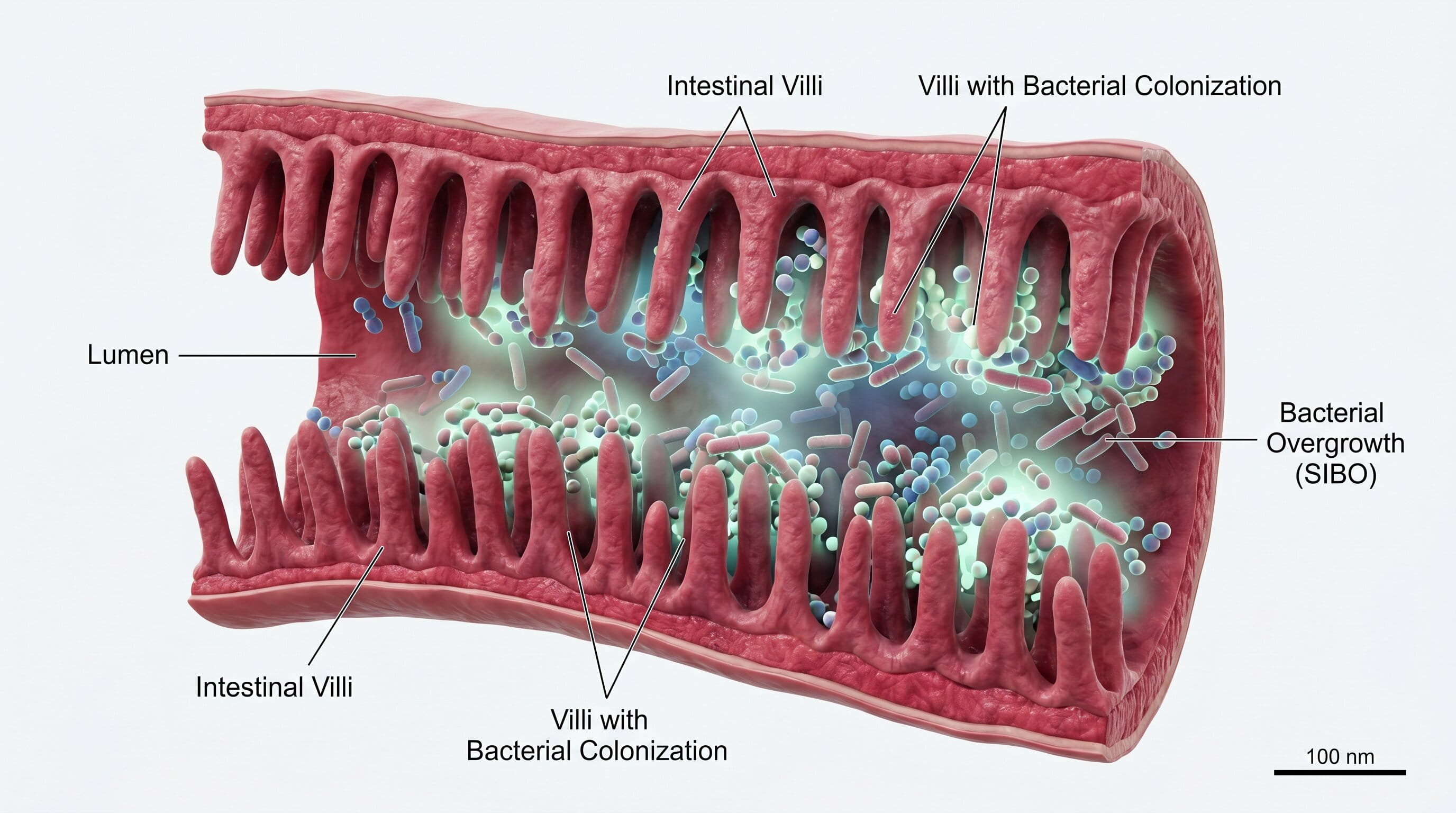
A polyp is any abnormal growth that rises from a lining, such as the colon lining. An adenoma is a type of polyp made from glandular tissue and is considered precancerous. All colon adenomas are polyps, but not all colon polyps are adenomas.
Why the Difference Matters
Patients often use the words polyp and adenoma as if they mean the same thing. They are related, but the distinction matters for risk and follow-up. A colonoscopy may find several types of polyps, including hyperplastic polyps, inflammatory polyps, serrated lesions, and adenomas. Some have little cancer potential, while others require closer attention. The pathology report gives the exact classification after the tissue is examined under a microscope.
Polyp Is the Shape Word
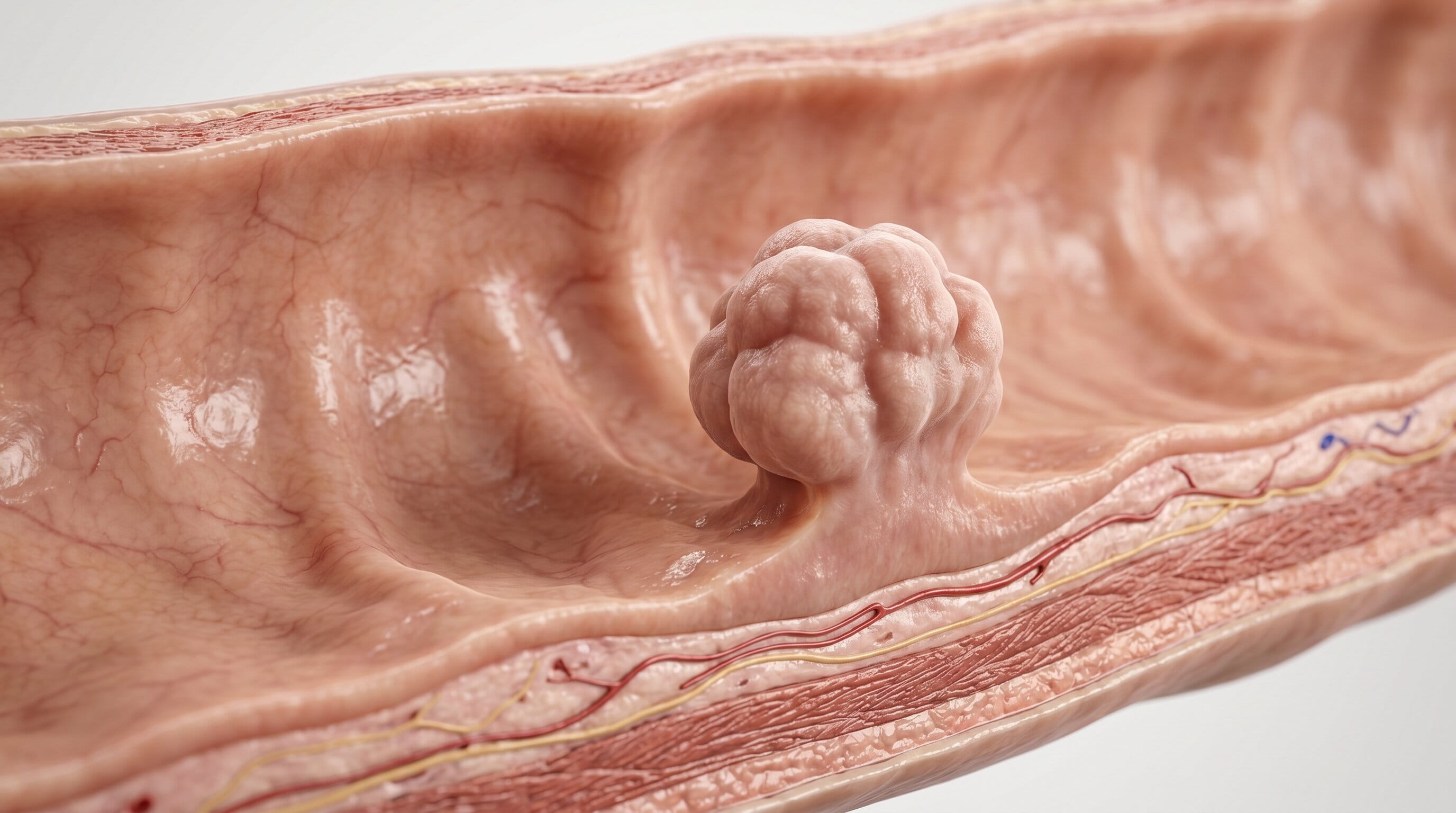
Polyp describes the growth pattern. It tells you that tissue is projecting from the surface of a lining. A polyp can be small, large, flat, raised, pedunculated, or sessile. This visual description does not always tell you whether the growth is dangerous. A tiny polyp can still require testing, and a larger polyp may need advanced removal techniques. The word polyp is the starting point, not the final diagnosis.
Adenoma Is the Tissue Word
Adenoma describes what the tissue is. In the colon, adenomas arise from glandular cells and are treated as precancerous because they can progress through an adenoma-carcinoma pathway. This progression is usually slow, but risk rises with size, number, villous features, and dysplasia. Once a pathology report says adenoma, the follow-up plan becomes more specific.
Common Types Compared
Hyperplastic polyps are often low risk when small and located in the rectum or sigmoid colon. Adenomatous polyps include tubular, villous, and tubulovillous adenomas. Serrated lesions include sessile serrated lesions and traditional serrated adenomas, which can be more difficult to detect when flat or mucus-covered. Inflammatory polyps may occur with inflammatory bowel disease but are interpreted in the full clinical context.
How Colonoscopy Clarifies the Answer
During colonoscopy, the doctor can see, measure, remove, and retrieve the polyp. However, the final distinction between polyp types usually requires pathology. This is why patients should not rely only on the procedure note. The pathology report tells whether the tissue was adenomatous, serrated, hyperplastic, inflammatory, or another type.
Why Removal Is Often Recommended
Because appearance alone cannot always predict microscopic risk, many polyps are removed during colonoscopy. Removing an adenoma interrupts its potential progression. Removing other polyps can also help confirm risk and reduce uncertainty. Polypectomy is one of the reasons colonoscopy is both a screening test and a preventive procedure.
How Follow-Up Is Decided
Follow-up is not based on the word polyp alone. It depends on the final pathology, the number of polyps, the largest size, the completeness of removal, bowel preparation quality, and the patient's personal and family history. Two patients may both say they had polyps, but one may return in ten years while the other needs surveillance much sooner.
When the Report Needs Specialist Review
A gastroenterologist should review findings such as adenoma, sessile serrated lesion, dysplasia, villous features, incomplete removal, multiple polyps, or poor prep. At GastroDoxs, patients in Cypress, Katy, Jersey Village, and Greater Houston can receive colonoscopy-based evaluation, polyp removal, and follow-up planning from a digestive health team led by Dr. Bharat Pothuri.
How to Read the Colonoscopy and Pathology Reports
For adenoma vs polyp: what is the difference?, the colonoscopy report and pathology report should be read together.
The colonoscopy report usually documents location, size, shape, removal method, bowel preparation quality, and whether the exam reached the intended portion of the colon.
The pathology report confirms tissue type and dysplasia.
Patients should not rely on memory alone because small details can change follow-up timing.
A report that says one small tubular adenoma is different from a report that lists a large adenoma, multiple adenomas, villous features, high-grade dysplasia, or piecemeal resection.
Keeping these reports helps future doctors avoid repeating tests too early or waiting too long.
Patient Questions That Improve Follow-Up
The best visit after an adenoma finding should end with clear answers.
Patients can ask: What type of adenoma or serrated lesion was found? How many were removed? What was the largest size? Was removal complete? Did the pathology show dysplasia? Was the bowel prep good enough? When should the next colonoscopy happen? Does my family history change the plan?
These questions make the visit more useful and support safer long-term prevention.
They also reduce anxiety because the patient understands why the follow-up interval was chosen.
Lifestyle and Risk Reduction After an Adenoma
Lifestyle changes cannot remove an adenoma that already exists, but they can support future risk reduction.
Practical steps include staying current with colonoscopy surveillance, avoiding tobacco, limiting alcohol, maintaining a healthy weight, increasing physical activity, and choosing a diet pattern that includes fiber-rich foods, fruits, vegetables, and fewer processed meats.
Patients should also manage diabetes, inflammatory bowel disease, and other medical conditions with their clinicians.
The goal is not perfection. The goal is to combine medical prevention with realistic habits that support colon health over time.
Why This Topic Matters for Search and Patient Education
This topic deserves a dedicated page because patients search for adenoma information at different stages.
Some have just read a pathology report. Some are deciding whether to schedule colonoscopy. Others want to know if their family is at risk.
A market-dominant article should answer definition, risk, diagnosis, treatment, follow-up, symptoms, and specialist-care questions without repeating generic content from every other page in the cluster.
This page should naturally connect to colonoscopy, colorectal cancer screening, colon polyp removal, rectal bleeding, iron deficiency anemia, and local gastroenterology care.

Warning Signs That Need Prompt Medical Attention
Contact a healthcare professional promptly if you have any of the following:
- Rectal bleeding or black stools
- New or unexplained iron deficiency anemia
- Unintentional weight loss
- Persistent change in bowel habits
- Family history of colorectal cancer or advanced polyps
- A positive stool-based screening test
- Abdominal pain with vomiting, fever, or worsening weakness
GastroDoxs Care Note
At GastroDoxs, patients in Cypress, Katy, Jersey Village, and Greater Houston can receive colonoscopy-based evaluation, polyp removal, and follow-up planning from a digestive health team led by Dr. Bharat Pothuri.
Key Takeaways
The safest way to understand a colonoscopy report is to separate shape from tissue. Polyp means growth. Adenoma means a specific precancerous tissue type. Your risk and next step depend on the pathology report, not just the visual finding. Keep both reports and follow the recommended surveillance plan.