A cirrhosis diagnosis often triggers one urgent question: how serious is it? That question makes sense, because cirrhosis is not a single fixed state. It is a spectrum. Some people have cirrhosis that is present but still relatively stable. Others have cirrhosis with major complications such as fluid buildup, internal bleeding, confusion, or liver failure.
That difference matters. It affects symptoms, prognosis, surveillance, treatment decisions, and whether transplant evaluation becomes part of the conversation.
This guide explains the stages of cirrhosis in plain language, including compensated cirrhosis, decompensated cirrhosis, common complications, what affects prognosis, and how patients are monitored over time.
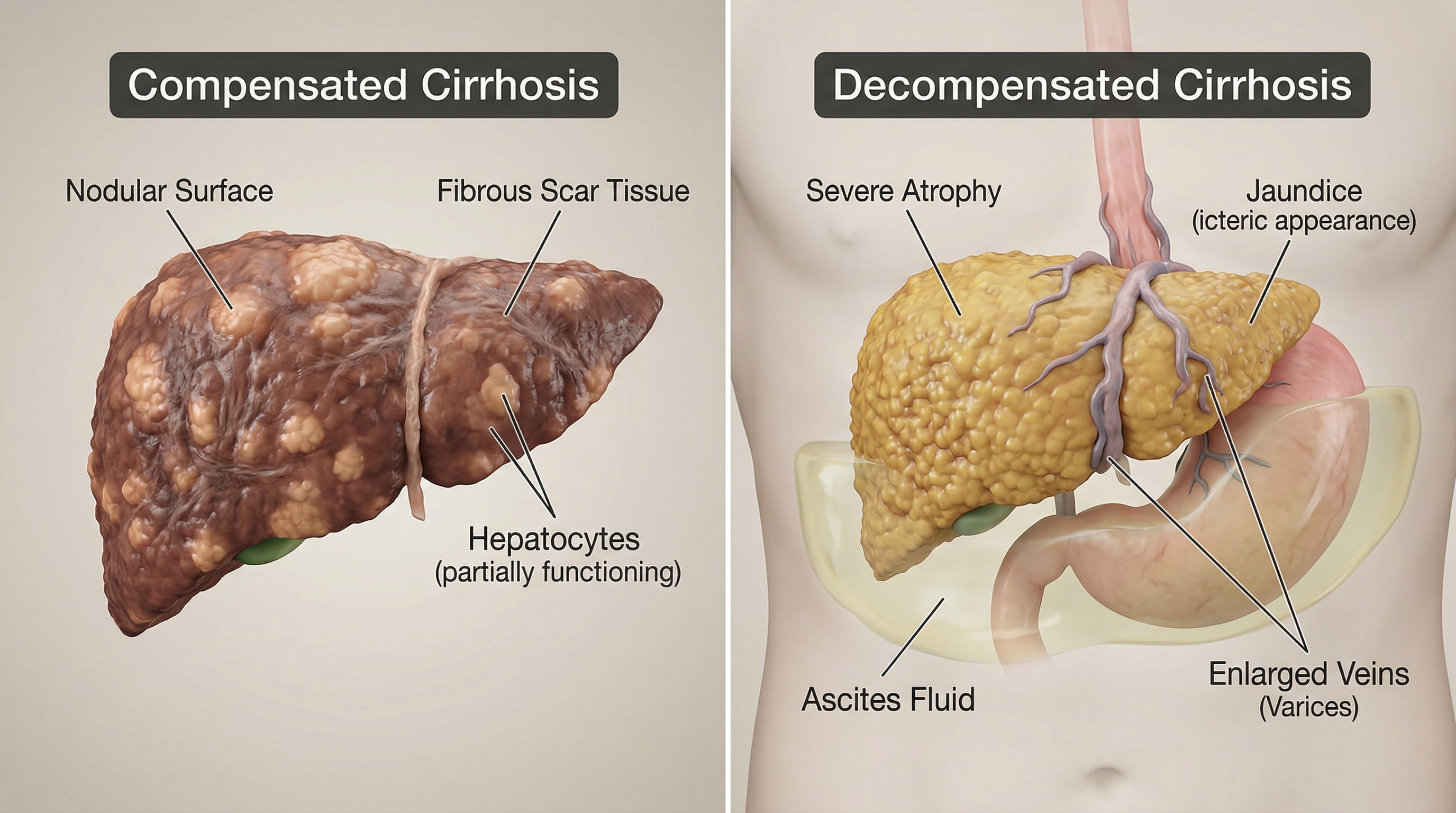
Quick Answer: What Are the Stages of Cirrhosis?
Cirrhosis is commonly discussed in two broad stages: compensated and decompensated.
Compensated cirrhosis means the liver is scarred but still able to perform enough of its essential functions that major complications have not yet developed.
Decompensated cirrhosis means complications have started. These complications may include ascites, variceal bleeding, jaundice, hepatic encephalopathy, or recurrent infections.
The shift from compensated to decompensated cirrhosis is one of the most important turning points in liver disease care.
What Is Compensated Cirrhosis?
Compensated cirrhosis refers to a stage in which the liver has significant scarring, but the body is still coping well enough that obvious complications are absent or limited.
A person with compensated cirrhosis may:
- feel normal
- have mild fatigue
- notice reduced appetite
- have itching or mild abdominal discomfort
- discover the condition on routine blood work or imaging
This stage is serious, but it is often the best time to intervene aggressively. Treating the underlying cause, avoiding alcohol, controlling metabolic risk factors, and monitoring for complications can slow progression.
What Is Decompensated Cirrhosis?
Decompensated cirrhosis means the liver and the circulation around it can no longer compensate for the scarring. At that point, complications begin to appear.
Major signs of decompensation include:
- ascites
- variceal bleeding
- hepatic encephalopathy
- jaundice
- spontaneous bacterial peritonitis
- worsening kidney function
Once a person becomes decompensated, care becomes more complex and close follow-up is essential.
Why Cirrhosis Progresses
The liver responds to chronic injury by laying down scar tissue. Over time, that scar tissue changes the liver’s structure and interferes with blood flow through the organ. This increases pressure in the portal vein system, a problem known as portal hypertension.
Portal hypertension is a key reason cirrhosis becomes dangerous. It contributes to fluid buildup, enlarged veins in the esophagus or stomach, splenomegaly, low platelets, and bleeding risk.
The Major Complications of Cirrhosis
1. Ascites
Ascites is the buildup of fluid in the abdomen. It is one of the most common signs that compensated cirrhosis has become decompensated.
Patients may notice:
- a swollen or tight belly
- rapid increase in abdominal size
- pressure or discomfort
- early fullness with meals
- shortness of breath
- weight gain from fluid
Ascites increases the risk of infection and often requires sodium restriction, diuretics, and sometimes drainage procedures.
2. Varices and Gastrointestinal Bleeding
When portal pressure rises, blood looks for alternate pathways around the liver. This can create fragile enlarged veins called varices, especially in the esophagus and stomach.
If varices rupture, they may cause:
- vomiting blood
- black, tar-like stools
- dizziness
- fainting
- life-threatening blood loss
This is why screening endoscopy and portal hypertension management matter in cirrhosis care.
3. Hepatic Encephalopathy
Hepatic encephalopathy happens when the diseased liver cannot clear toxins effectively. Those toxins can affect brain function.
Symptoms may include:
- confusion
- poor concentration
- forgetfulness
- personality changes
- sleep reversal
- slurred speech
- unusual drowsiness
This can range from subtle brain fog to severe mental status changes. New confusion in a cirrhosis patient is always important.
4. Jaundice
Jaundice happens when bilirubin builds up in the body. It causes yellowing of the skin and eyes and may be associated with dark urine and pale stools.
Jaundice often signals worsening liver function or bile flow problems and is an important marker of disease progression.
5. Infection Risk
People with cirrhosis are more vulnerable to infections, especially when ascites is present. Fever, abdominal pain, worsening confusion, or sudden illness can signal infection and need prompt evaluation.
6. Kidney Dysfunction
Advanced cirrhosis can affect kidney function through changes in circulation, inflammation, and fluid balance. This increases overall risk and can complicate treatment.
7. Liver Cancer
Cirrhosis is one of the most important risk factors for hepatocellular carcinoma. That is why ongoing screening is part of routine cirrhosis care.
What Affects Prognosis in Cirrhosis?
Patients often search for “cirrhosis life expectancy,” but there is no single timeline that fits every person. Prognosis depends on multiple factors, including:
- compensated vs decompensated disease
- cause of liver injury
- whether the cause can be treated
- alcohol use after diagnosis
- kidney function
- recurrent infections
- presence of variceal bleeding
- severity of ascites
- degree of encephalopathy
- liver cancer development
- nutritional status
- candidacy for liver transplant
That means two people with the same diagnosis may have very different clinical courses.
How Doctors Assess Severity
Doctors use symptoms, exam findings, labs, imaging, and scoring systems to understand how advanced cirrhosis is.
Child-Pugh Classification
This system helps estimate severity based on bilirubin, albumin, clotting, ascites, and encephalopathy.
MELD Score
The MELD score is widely used to estimate disease severity and help determine transplant priority.
Imaging and Endoscopy
Ultrasound, CT, MRI, elastography, and upper endoscopy help identify portal hypertension, varices, nodular liver changes, splenomegaly, ascites, and liver masses.
Why Early-Stage Cirrhosis Still Matters
Some patients feel reassured when they hear the word “compensated.” That is understandable, but compensated cirrhosis still requires serious follow-up.
Why? Because the liver is already scarred. A person may feel well today but still have ongoing injury, portal hypertension, or a rising risk of cancer and future decompensation. The goal at this stage is not to wait for symptoms. It is to prevent them.
Common Symptoms by Stage
Compensated Cirrhosis
- no symptoms
- fatigue
- mild weakness
- reduced appetite
- itching
- mild upper abdominal discomfort
- low platelets or abnormal liver tests on labs
Decompensated Cirrhosis
- jaundice
- ascites
- leg swelling
- vomiting blood
- black stools
- confusion
- severe weakness
- recurrent hospitalizations
- infections
Can Cirrhosis Go From Stable to Serious Quickly?
Yes. Some patients remain stable for long periods, but cirrhosis can also worsen quickly after bleeding, infection, alcohol use, medication injury, hepatitis flare, or kidney problems.
That is why regular follow-up matters even when symptoms are mild.
What Monitoring Is Needed?
Good cirrhosis care usually includes:
- periodic liver blood tests
- imaging surveillance for liver cancer
- nutritional monitoring
- screening for varices when appropriate
- tracking fluid retention and mental status changes
- ongoing treatment of the underlying cause
Surveillance is not optional in cirrhosis. It is part of preventing avoidable complications.
When Transplant Evaluation Enters the Conversation
A liver transplant is not the first step for every person with cirrhosis, but it becomes more relevant when the disease is advanced, complications recur, or liver function continues to worsen despite treatment.
Transplant discussions often arise with:
- refractory ascites
- recurrent variceal bleeding
- severe encephalopathy
- worsening MELD score
- liver cancer in transplant-eligible settings
- declining quality of life from liver failure
What Patients Should Ask After a New Diagnosis
A new cirrhosis diagnosis should prompt clear questions, such as:
- What caused the cirrhosis?
- Is it compensated or decompensated?
- Do I need an endoscopy?
- Do I need liver cancer screening?
- Should I stop alcohol completely?
- What should I do about weight, diet, and exercise?
- Do I need transplant referral?
- Which symptoms mean I should seek urgent care?
These questions lead to better next-step planning and more informed long-term care.
Bottom Line
Cirrhosis stage matters because it changes what the diagnosis means in real life. Compensated cirrhosis means the liver is scarred but has not yet triggered major complications. Decompensated cirrhosis means the complications have started and the risks are higher.
The earlier cirrhosis is identified and managed, the better the chance of slowing progression, preventing hospitalizations, and preserving quality of life. For patients who need digestive or liver-related evaluation, GastroDoxs can help initiate the workup and guide next-step GI care.
The Four-Stage Language Patients Often See Online
Many patients search for terms like “stage 1 cirrhosis” or “stage 4 cirrhosis.” Online, cirrhosis is sometimes described in four stages, but in real clinical practice the more meaningful distinction is usually compensated versus decompensated disease.
That said, the four-stage language is often used in a simplified way:
- Stage 1 often refers to cirrhosis without major complications.
- Stage 2 may refer to portal hypertension with varices.
- Stage 3 is often used to describe ascites.
- Stage 4 is commonly used for bleeding, severe decompensation, or life-threatening complications.
This type of staging can be useful for patient education, but it is less precise than the systems doctors actually use for management and prognosis.
Why the First Decompensating Event Matters So Much
The first major complication changes the whole conversation. A patient who has never had ascites, bleeding, or encephalopathy is managed very differently from someone who has already had one of those events.
After the first decompensating event, doctors watch more closely for recurrence, infection, hospitalizations, nutrition decline, kidney injury, and need for transplant referral. This is why the appearance of new ascites or a bleeding episode is not just another symptom. It is a meaningful shift in disease course.
What Hospitalization Often Means in Cirrhosis
Not every hospital stay means liver failure, but hospitalization in cirrhosis should never be ignored. Common reasons include gastrointestinal bleeding, infected ascites, severe encephalopathy, worsening jaundice, kidney dysfunction, and rapid fluid accumulation.
For some patients, a hospital stay becomes the moment when cirrhosis is first recognized. For others, it signals that previously compensated disease has become unstable.
Why Nutrition and Muscle Mass Affect Prognosis
Patients often focus only on bilirubin or liver enzymes, but nutrition is also important. Muscle wasting and frailty are common in cirrhosis and can meaningfully affect resilience, mobility, infection risk, recovery after complications, and overall outcomes.
That is why weight alone can be misleading. A person may appear stable or even heavier because of ascites, while actually losing functional muscle mass underneath.
Can Someone Live a Long Time With Cirrhosis?
Yes, some people with compensated cirrhosis live for years with careful monitoring and treatment of the underlying cause. Others progress more quickly because of bleeding, infection, ongoing alcohol use, liver cancer, kidney problems, or severe portal hypertension.
The key point is that prognosis is dynamic, not fixed. It can improve or worsen depending on what happens after diagnosis and whether complications are prevented or controlled.
Why Cause Matters So Much
Two people may both have cirrhosis, but the underlying reason still matters. A patient who stops alcohol completely, controls metabolic risk factors, and adheres to surveillance may do much better than someone whose liver continues to be injured. Likewise, a patient with controlled viral hepatitis may have a different trajectory than someone with recurrent untreated inflammation.
That is why every cirrhosis workup should answer not only “how advanced is it?” but also “why did it happen?”

What Patients and Families Should Watch For at Home
Symptoms between visits often tell the real story. Families should watch for:
- sudden belly enlargement
- increasing ankle swelling
- blood in vomit
- black stools
- confusion or unusual sleepiness
- decreased appetite with weakness
- falls or instability
- fever or abdominal pain
- marked decrease in urine output
These changes can signal worsening decompensation and should prompt medical guidance quickly.
Key Takeaways
- Cirrhosis is commonly divided into compensated and decompensated stages.
- The development of ascites, bleeding, jaundice, or encephalopathy signals more advanced disease.
- Prognosis depends on the cause, complications, kidney function, nutrition, and treatment response.
- Routine surveillance is essential, even when symptoms are mild.
- Transplant evaluation may become important in advanced or recurrently complicated cirrhosis.